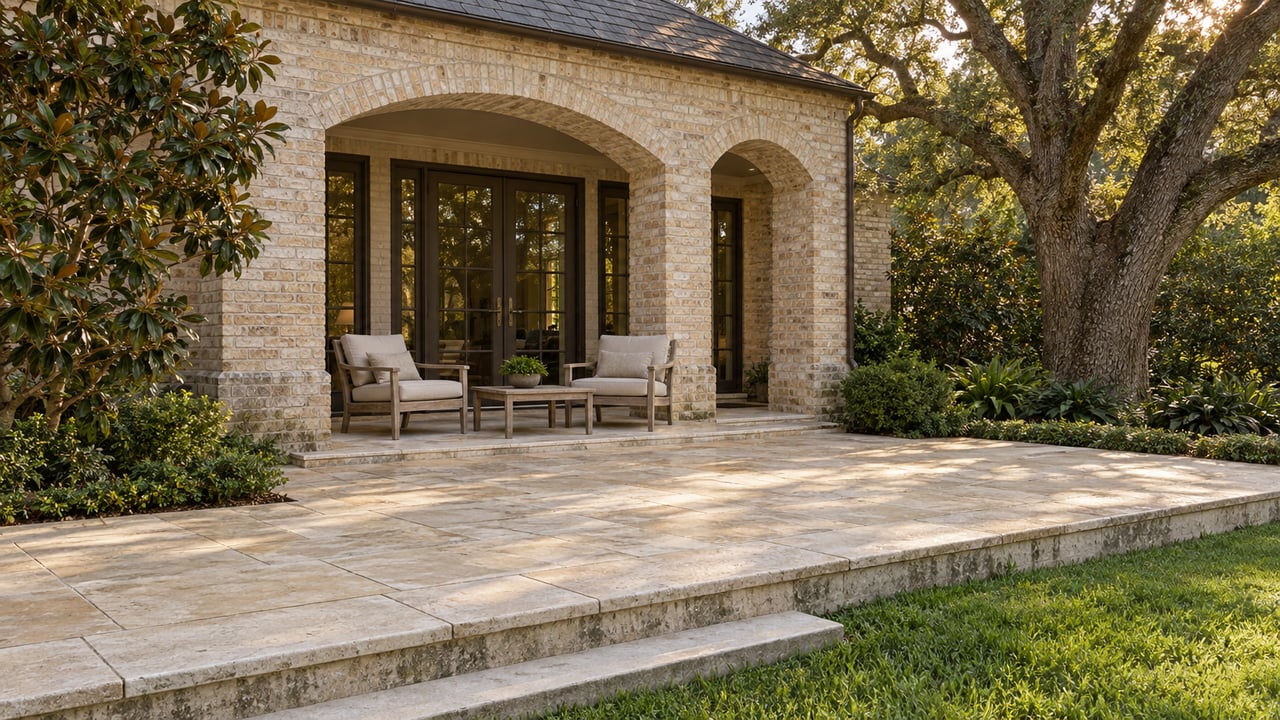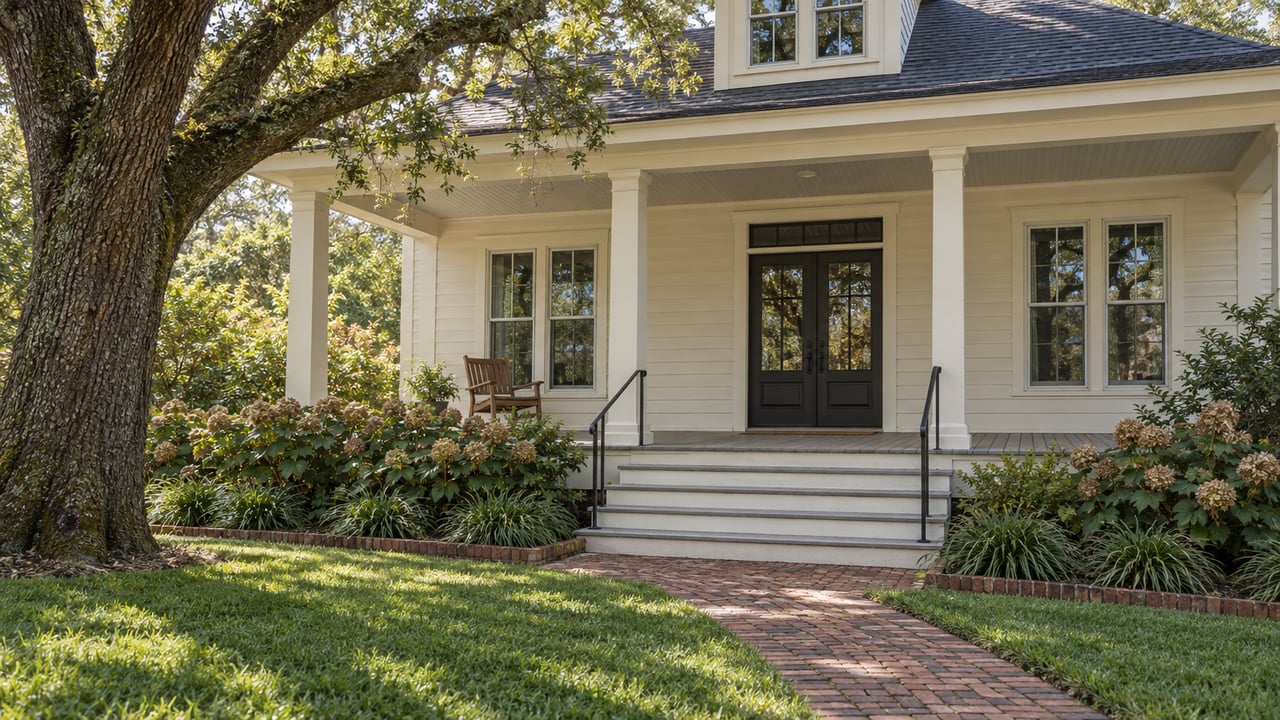
A buyer comparing two nearly identical five-bedroom homes, one under contract in Hunters Creek Village and one in Hilshire Village, will often assume the smaller city comes with the smaller bill. Hilshire has roughly 800 residents. Hunters Creek has more than five times that population and some of the largest wooded lots in the Memorial Villages cluster. Smaller government, smaller budget, smaller rate seems like reasonable math.
The most recently adopted city tax rates say otherwise. For tax year 2025, Hilshire Village's rate is $0.5292 per $100 of taxable value, the highest of the six Memorial Villages. Hunters Creek Village's rate is $0.2052, the lowest. The city with the fewest residents charges roughly two and a half times the rate of the city with some of the biggest lots on the west side of Houston.
Six City Halls, Six Different Numbers
The Memorial Villages read on paper like one neighborhood: six independent cities, incorporated in 1954 and 1955 specifically so residents could avoid annexation by Houston. Each still elects its own council, runs its own permitting office, and sets its own tax rate every year, typically adopting the new rate each fall. Here is where those rates landed for tax year 2025, the most recently confirmed figures at publication, ordered from lowest to highest:
| Village | 2025 City Tax Rate (per $100 of value) |
|---|---|
| Hunters Creek Village | $0.2052 |
| Piney Point Village | $0.2551 |
| Bunker Hill Village | $0.2710 |
| Hedwig Village | $0.3363 |
| Spring Valley Village | $0.3950 |
| Hilshire Village | $0.5292 |
Spring Branch ISD adds $1.0231 on top of whichever village rate applies, and Harris County adds another $0.3810. Those two layers are the same for every address in the cluster, with one geographic exception covered further down. The city line is the only piece of the bill that changes from block to block, and it's the piece most buyers never think to ask about because it looks like a rounding error next to the school district rate. Because each village council resets its rate annually, a buyer comparing two addresses should confirm the current year's adopted rate directly with the city rather than treating any published table, including this one, as permanent.
Some general guides lump Piney Point and Hunters Creek together as "the low-tax villages" without distinguishing between them, and at a glance that's close enough. But the actual adopted figures put daylight between them: Hunters Creek runs meaningfully below Piney Point, not just below Hedwig or Spring Valley. A buyer choosing between the two on tax grounds alone is choosing between $0.2052 and $0.2551, a real gap even if both sit well under the cluster's midpoint.
Why the Smallest Village Charges the Most
The mechanism isn't mysterious once you look at what a city tax rate actually pays for. Each Memorial Village runs its own budget for public works, administration, and a share of shared services like the Village Fire Department, which covers all six cities, and the Memorial Villages Police Department, which covers Bunker Hill, Piney Point, and Hunters Creek specifically. Those costs don't scale down proportionally just because a city is small. A public works crew, a city secretary, and a police contract cost roughly what they cost whether the city has 800 residents or 4,300.
Hilshire Village spreads that fixed cost across a taxable base of a few hundred parcels. Hunters Creek spreads a comparable set of obligations across a population more than five times as large, with a much bigger stock of high-value real estate to tax. The rate isn't a judgment on the villages' relative wealth. It's arithmetic: the same fixed municipal cost, divided by a much smaller denominator, comes out to a bigger percentage.
It's worth noting what doesn't explain the gap. Hedwig Village's own zoning code describes the city as "a residential community with a complementing business community," and it does carry commercial development along Bunker Hill Road and Memorial Drive that Piney Point's deed restrictions specifically prohibit. If commercial tax base were the deciding factor, Hedwig should sit lower than Piney Point. It doesn't. Hedwig's rate is $0.3363 against Piney Point's $0.2551, which suggests population and total taxable value carry more weight than land use mix. The village with more rooftops and more assessed value per rooftop gets the lower rate, commercial strip or not.
The Rate Tells You Less Than the Math
A lower rate doesn't automatically mean a lower bill, because the rate applies to whatever the county appraises the home at, and the villages' home values don't move in lockstep with their rates. Take a hypothetical $3 million home in Hunters Creek against a hypothetical $900,000 home in Hilshire. At $0.2052 per $100, the Hunters Creek home's city portion comes to roughly $6,156 a year. At $0.5292 per $100, the Hilshire home's city portion comes to roughly $4,763. The higher rate produces the smaller check, because the valuation gap between the two homes is bigger than the rate gap between the two cities.
This is the piece a rate comparison alone will never show. The number on the city's budget page tells you the percentage. It doesn't tell you what percentage of what. A buyer who wants an actual dollar comparison between two specific addresses needs the appraised value from each property's Harris County Appraisal District account, not just the published rate from each village's website.
A Median That Moves With Two Closings
Hilshire's tax rate isn't the only number that behaves strangely because of its size. One market report published in mid-2024 put Hilshire's median sale price at $888,000. Less than a year later, in May 2025, another market tracker reported a median sale price of $2.2 million for the same city. That's not two different neighborhoods disagreeing. It's the same neighborhood of roughly 800 residents, where a handful of closings in a given stretch can swing the reported median by more than a million dollars in either direction.
A village that size might see only a few dozen closed sales in a full year. When the sample is that thin, one custom build closing at the high end can push a reported median well above where it sat a few months earlier, with no change at all in what typical homes there are worth. In a market the size of greater Houston, a median sale price is a reasonably stable signal. In a market the size of Hilshire Village, a single reporting window is closer to noise, and treating one month's or one report's number as a fixed fact about the village is the kind of mistake that shows up later as an unrealistic listing price or an unrealistic offer.
The practical version of this lesson: for the smallest villages in the cluster, specifically Hilshire and to a lesser extent Spring Valley, a serious buyer or seller needs a longer trailing window of comparable sales, not the most recent single month, before drawing conclusions about where the market actually sits.
The School Line That Doesn't Follow the City Line
The Memorial Villages read as uniformly zoned to Spring Branch ISD, and for most of the cluster that's accurate. But the boundary isn't as clean as the city limits suggest. The portions of both Hunters Creek Village and Piney Point Village that sit south of Buffalo Bayou fall inside Houston ISD instead of Spring Branch ISD, a carve-out documented in Hunters Creek Village's own municipal history and confirmed by the village's zip code split, with most of the city in 77024 and the section south of the bayou in 77063.
This line doesn't track with anything visible from a village map. A buyer looking at two homes on the same street, one north of the bayou and one south of it, could be looking at two different school districts entirely, not two different high schools within the same district but two entirely separate systems with their own enrollment rules, boundaries, and campus assignments. It's the kind of detail that only surfaces when someone checks the specific address against the district's own attendance zone rather than assuming the whole city shares one answer.
For any address near Buffalo Bayou in either village, confirming the district assignment directly with Spring Branch ISD or Houston ISD before writing an offer is worth the ten minutes it takes.
What This Means Before You Compare Two Addresses
None of this argues that one Memorial Village is a better or worse place to buy than another. It argues that the shorthand version, small village equals small bill, large lots equal large bills, doesn't hold up once you look at the actual adopted numbers. The city rate, the appraised value, and the school district assignment are three separate variables that don't move together, and a buyer who checks only one of them is working from an incomplete picture.
The full set of taxing units attached to any specific parcel, city, school district, county, flood control, and hospital district among them, is listed on that parcel's Harris County Appraisal District account. That's the place to start before comparing two addresses on paper, and it's a five-minute check that answers the tax question more precisely than any general guide to the cluster ever will.
Frequently Asked Questions
Does the village with the lowest tax rate always mean the lowest tax bill? No. The rate applies to the home's appraised value, and appraised values vary enormously within the cluster. A high-rate village with lower-valued homes can produce a smaller city tax bill than a low-rate village with much higher-valued homes.
Are all six Memorial Villages zoned to Spring Branch ISD? Most of the cluster is, but the sections of Hunters Creek Village and Piney Point Village south of Buffalo Bayou fall inside Houston ISD instead. The rest of Hunters Creek, along with Bunker Hill, Hedwig, Spring Valley, and Hilshire, is zoned to Spring Branch ISD.
How do I check the exact rate and district for one specific address? Pull the parcel's account from the Harris County Appraisal District, which lists every taxing unit attached to that address, and confirm the school attendance zone directly with the applicable district before making an offer.
If you're comparing two homes across the Memorial Villages and want the actual tax math worked out address by address, along with a straight answer on which side of the Buffalo Bayou line either one falls, Shannon Poindexter and the Property Collective Group team can pull the specific numbers for both properties before you write an offer.
This article is general information, not legal, tax or financial advice. Consult a qualified professional about your situation.