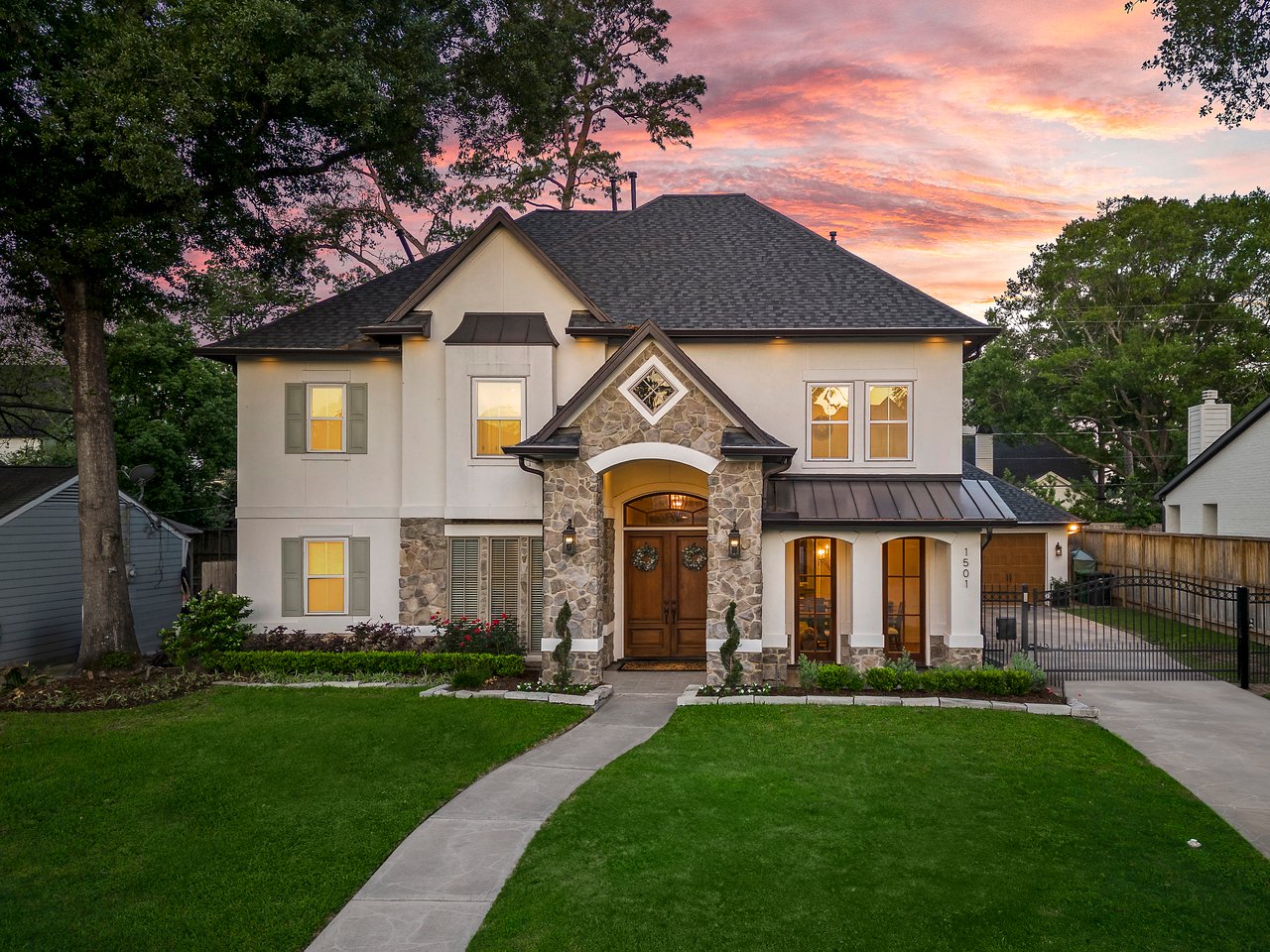
Spring Branch is one of Houston's largest and most diverse neighborhoods, covering nearly 40 square miles of tree-lined streets, mid-century homes, and an increasingly serious culinary and retail scene. It’s not a neighborhood that fits a single description, which is part of what makes it worth understanding before you start your search.
Due to its size, navigating Spring Branch real estate takes some local knowledge. Areas north of Long Point Road can feel and price very differently from those south of it. This is one of the few places in Houston where older homes in the $200,000 to $300,000 range sit alongside new construction pushing well past $2 million. That range is not a contradiction; it simply reflects how much ground Spring Branch actually covers and how unevenly development tends to move through a neighborhood this size.
Looking to explore Spring Branch as your next neighborhood? Contact us to schedule a lifestyle tour.
Location and access
Spring Branch sits northwest of downtown Houston, bounded by the 610 Loop to the east, Beltway 8 to the west, Interstate 10 to the south, and Hempstead Road to the north. That frame of major highways is both the neighborhood's defining geographic feature and its strongest practical asset.
Quick Facts:
~10 mi to downtown Houston
~40 sq mi total neighborhood area
136,000+ residents
The Energy Corridor is a 15-minute drive west on I-10. Memorial City and its surrounding medical offices are effectively adjacent. Downtown is accessible in 20 minutes outside of peak hours, and the Texas Medical Center is reachable via the same interstate heading southeast. Highway 290 to the north opens additional commuting corridors for anyone working in the northwest part of the city.
For buyers considering Spring Branch and comparing the neighborhood to closer-in areas like Montrose or the Heights, there is definitely a trade off. Spring Branch homes offer less walkability and longer commutes to downtown and the Medical Center. The upside is more square footage and yard sizes.
The neighborhood's distinct pockets
Spring Branch is large enough that treating it as a single neighborhood misses the point. Different sections have distinct feels, price points, and home options with several subdivisions and gated communities tucked within them.
Spring Valley Village and Hilshire Village
Quick clarification before we get into it: Spring Valley Village and Hilshire Village are often lumped in with Spring Branch because they share the same zip codes and school district, but they are actually separate incorporated cities with their own governments and police forces. They are not part of the Spring Branch real estate market, though buyers come across them constantly in their search.
Both are part of the Memorial Villages, a collection of six small self-governing cities that incorporated in the 1950s to keep their streets quiet and their neighborhoods intact. Both are zoned to Spring Branch ISD, which is a big part of their appeal.
Spring Valley Village is at the western edge of the area. New construction here regularly clears $1.5 million, and the streets have that classic Memorial Villages feel: tree-covered, low traffic, neighborhood feel. Hilshire Village sits closer to the loop, about nine miles from downtown, and is one of the more wooded and tucked-away spots you'll find this close to the city. Lots are large, the community is close-knit, and residents tend to stay a long time.
Compared to Hunters Creek or Piney Point located south of I-10, both villages come in at a more accessible price point while still offering the land, the schools, and the protections that make the Memorial Villages worth buying into.
Spring Branch East (near the 610 Loop)
Spring Branch East sits right outside the 610 Loop, which puts you close to Memorial, the Heights, and downtown without the inner-loop price tag. It's the oldest part of Spring Branch and also where you'll find the most new construction activity, with teardowns and rebuilds happening at a steady pace across several subdivisions.
This area is bounded by Wirt and Bingle to the west, Hempstead and Milwee Street to the north, US 290 to the north and east, and I-10 (Katy Freeway) to the south.
Afton Village has that classic ranch feel, big lots, mature trees, and a mix of beautifully renovated originals alongside new builds. Brykerwoods is small but feels like Memorial, with large lots and a neighborhood character that attracts buyers who want that without the Memorial price. Monarch Oaks has some of the most serious new construction in this pocket, on oversized lots zoned to Valley Oaks Elementary and Memorial High. Westview Terrace is one of the more active teardown corridors in the area, with new builds regularly clearing $800k. Ravenna is something different: a manned gated community of 159 homes with an Italian village aesthetic, a resort pool, and prices starting around $1.4 million.
Spring Branch West
Spring Branch West has a different feel from the eastern pockets. The streets are quieter, the lots are bigger, and the pace is more suburban. It's the part of Spring Branch where you'll still find the original mid-century brick ranch homes largely intact, on generous lots with mature trees and established neighbors who have been there for decades.
The area straddles Beltway 8 and is bordered by I-10 to the south, Blalock Road to the east, Hammerly Boulevard and Clay Road to the north, and Bear Creek Pioneers Park to the west. Convenient retail access along the I-10 and Beltway 8 corridors keeps it practical without feeling remote.
The subdivisions here each have their own character. Shadow Oaks is one of the more sought-after addresses in the area, with oversized lots, deed restrictions, and strong school zoning that keeps demand steady. Royal Oaks has that same established, tree-canopied feel with a tight-knit community that residents tend to stay in long-term. Rollingwood and Sherwood Oaks are quieter and more tucked away, with homes that back up to greenspace along the Addicks Reservoir in some stretches. Sherwood Oaks in particular has a very active HOA, private garbage pickup, and its own security patrol, which gives it an almost village-like feel despite being well inside the city. Spring Shadows sits at the western edge, bordered by Beltway 8, with a mix of original ranches and newer builds on cul-de-sac streets designed to keep through traffic out.
For buyers who want more space per dollar and aren't chasing the newest construction, Spring Branch West tends to reward patience and local knowledge.
Spring Branch Central
Spring Branch Central is where you'll find some of the more distinctive housing options in the neighborhood, particularly for buyers who want something newer and amenity-rich without the full custom-build price tag.
Kolbe Farms is the standout here. It's a 38-acre gated community from InTown Homes, designed by architect Andrés Duany with an urban farmhouse aesthetic that feels different from anything else in Spring Branch. Homes have front porches, back patios, and an emphasis on outdoor living, arranged around a three-acre lake with walking trails, a pool, a pavilion, and a dog park. The 24-hour manned gate and the community's green space give it a self-contained feel that's rare this close to the city. Prices start in the $430s, which makes it one of the more accessible gated options in the area.
Beyond Kolbe Farms, Central is more mixed in character than East or West, with a blend of original ranch homes, apartment complexes, and commercial corridors along Long Point and Bingle. It's the part of Spring Branch where the neighborhood's diversity is most visible at street level, and where buyers focused on the upper end of the market will likely be looking specifically at Kolbe Farms rather than the broader area.
The Long Point corridor
Long Point Road, one of the oldest roads in Houston, runs east to west across the neighborhood and serves as both a commercial spine and a dividing line between the neighborhood's sub-sections. The corridor hosts a range of businesses that reflect Spring Branch's cultural diversity, including Korean restaurants, grocers, and small businesses that have been anchors here for decades. It is not a polished retail strip, but it has an authenticity that more curated neighborhoods tend not to offer.
Spring Branch real estate
The dominant residential type is the single-story brick ranch home, built primarily in the 1950s and 1960s on generous lots, many of which are a quarter-acre or larger. These homes have become the neighborhood's signature and, increasingly, its opportunity. Buyers and builders alike are drawn to the lot sizes, which make Spring Branch one of the few areas near Houston's core where significant outdoor space is still attainable at a reasonable price.
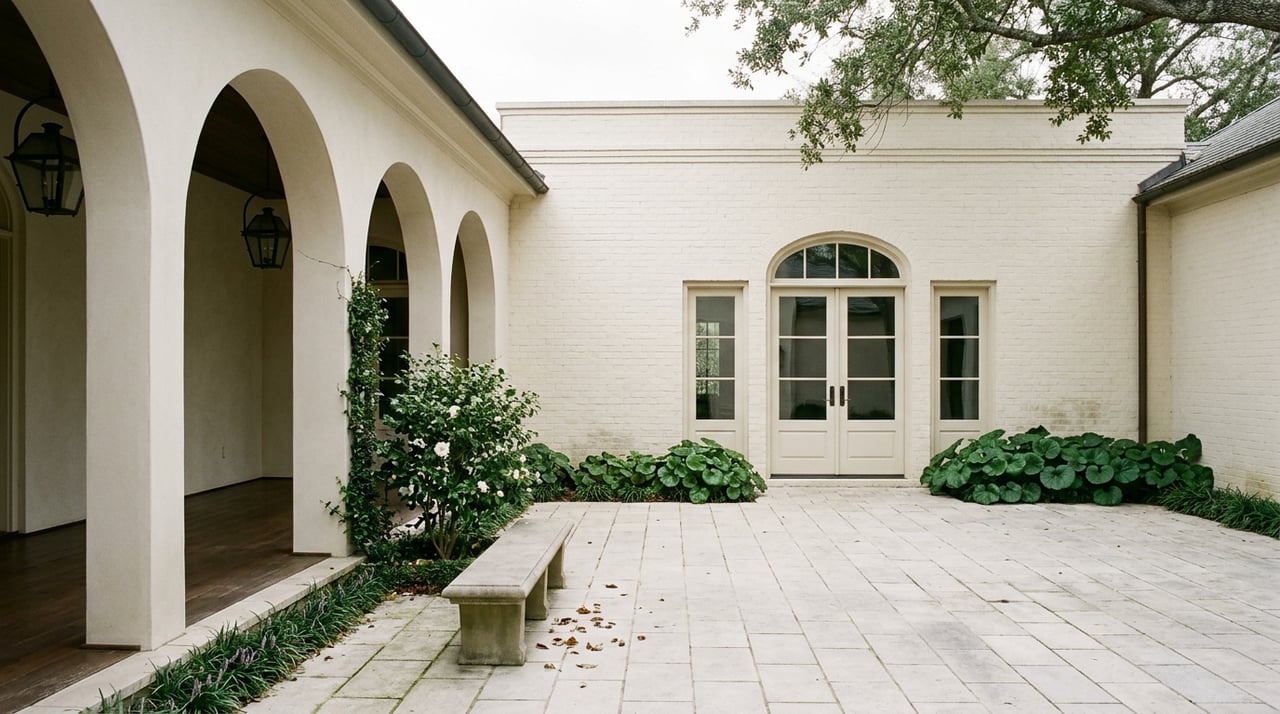
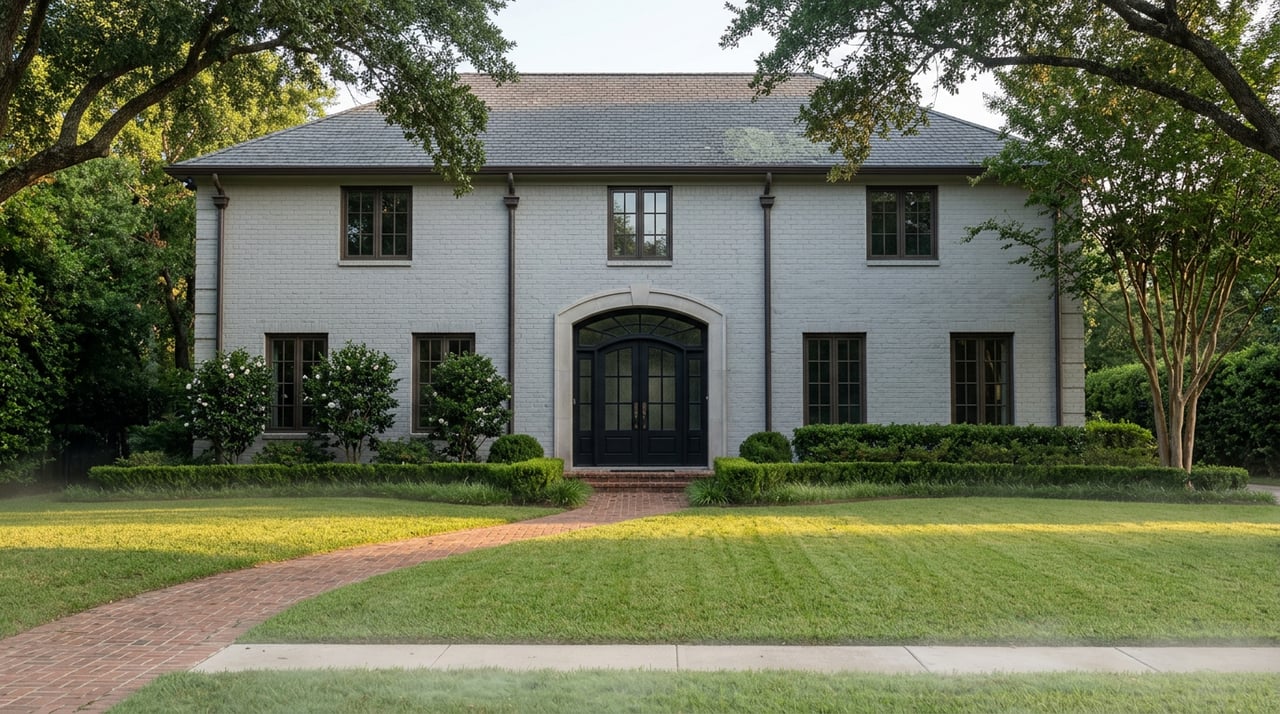
The teardown-and-rebuild trend has introduced a lot of new construction over the past decade: two-story traditional homes, modern builds with open plans, and custom residences at the upper end that compete directly with Memorial West product. Renovated originals are common as well, particularly in the eastern pockets, where buyers have updated interiors while preserving the single-story footprint and the lot.
Entry
$200s to $300s Older originals, value-focused buyers
Mid-market
$400s to $700s Renovated ranches, Spring Branch East new builds
Luxury
$1M to $2M+ Spec & Custom builds, Spring Valley and Hilshire Village
Spring Branch median price per square foot has appreciated steadily from $85 in 2012 to $214 in 2024, a gain of over 150% in twelve years. It’s not a volatile market. It’s a consistent one, which for long-term buyers is arguably the better quality anyway.
Spring Branch is one of the few areas near Houston's core where buyers can still access a quarter-acre or larger lot without paying inner-loop prices. That land value is the primary driver of the teardown-and-rebuild activity the neighborhood has seen over the past decade.
Spring Branch luxury real estate
The top end of Spring Branch is one of the more compelling stories in the market right now and it’s not fully priced in. Buyers comparing it to Memorial West are finding more lot depth, more square footage, and similar finish levels, but with pricing that still reflects a transitioning neighborhood rather than its trajectory.
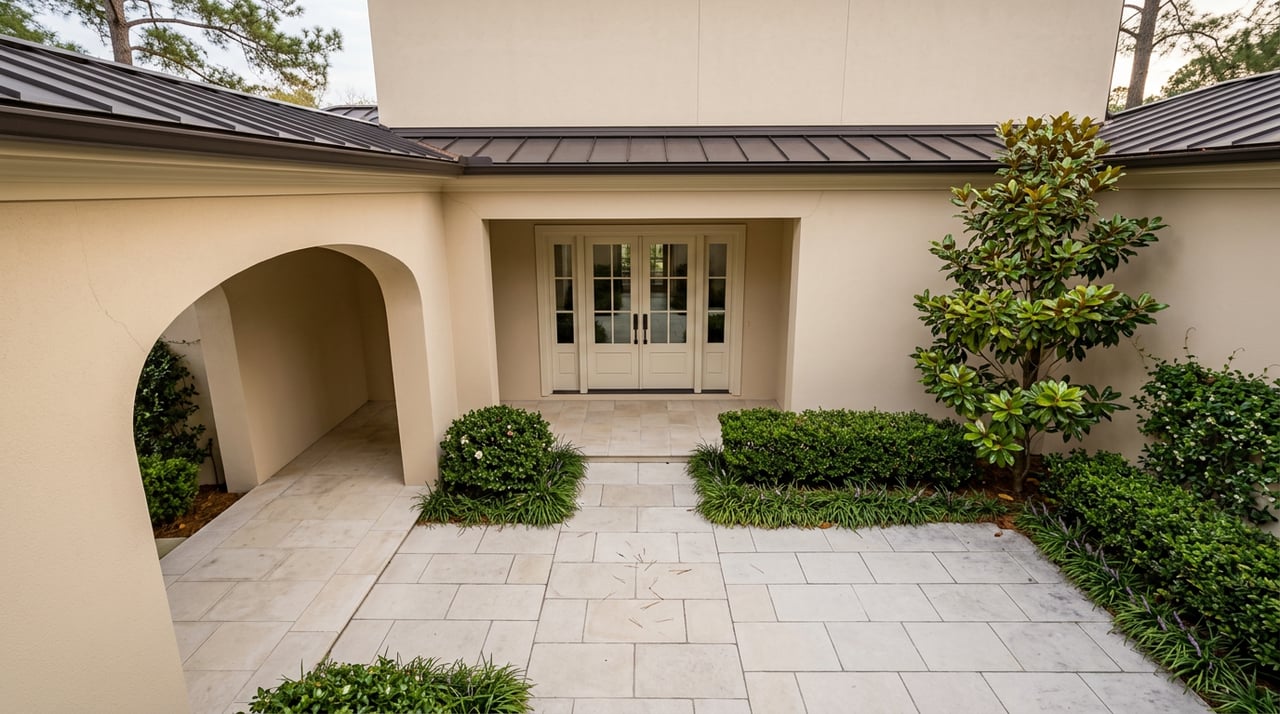
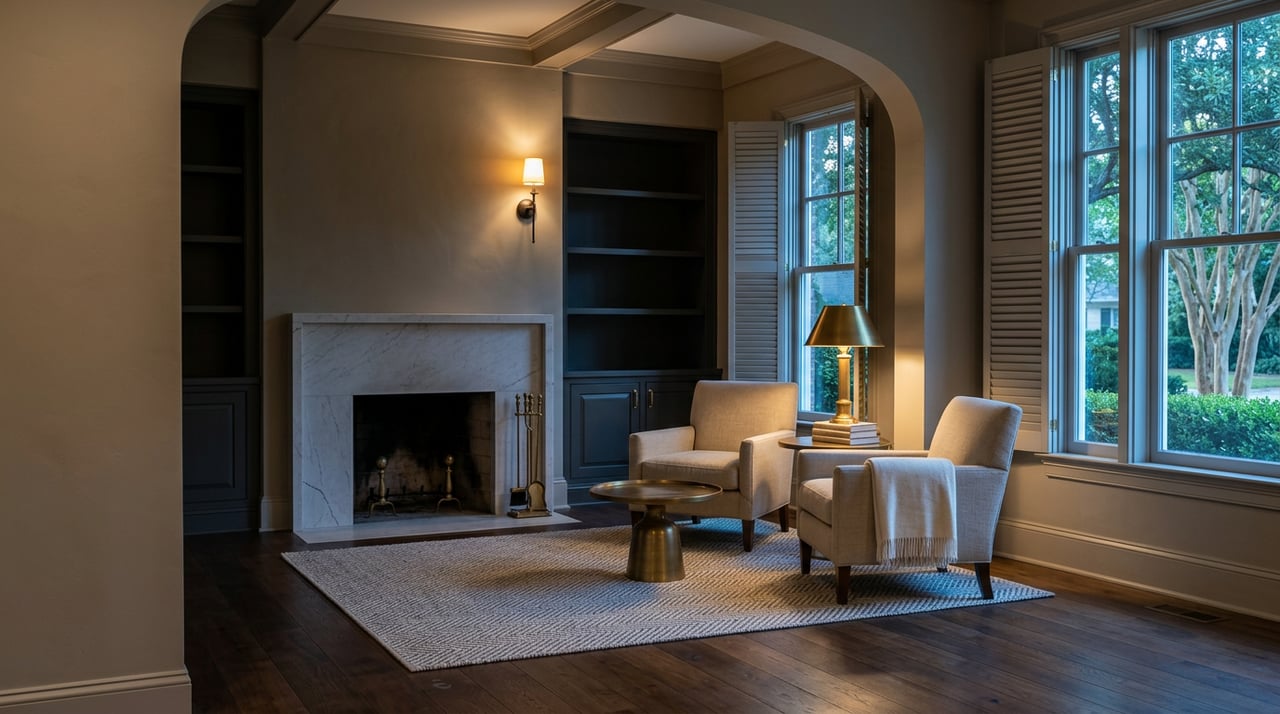
Custom & spec construction in closer-in Spring Branch, Spring Valley Village and Hilshire Village is the clearest expression of what the luxury market here looks like: homes on quarter-acre and larger parcels, resort-style outdoor spaces, open-concept interiors with high-end finishes, and price points that start around $1.5 million and run well above $2 million for fully customized builds. These are not compromises relative to Memorial product. They are competitive with it, on more land, at a better value per square foot.
The luxury buyer profile in Spring Branch has also shifted. A few years ago, the upper end of this market was primarily driven by local buyers who knew the neighborhood. Increasingly, buyers coming from other Houston ZIP codes and from out of state are arriving with Memorial West or River Oaks on their radar, touring Spring Branch, and finding that the value proposition is difficult to argue with. Homes priced above $1 million in Spring Branch are spending less time on market than they were two years ago, which is typically an early signal of a repricing event rather than a plateau.
For buyers interested in the luxury segment specifically, the work is in understanding which streets and subdivisions within Spring Branch are attracting the strongest new construction and which pockets carry more upside. That is a conversation worth having with an agent who knows the area at that level of granularity.
Spring Branch schools
Most of Spring Branch sits within Spring Branch Independent School District (SBISD), which is one of the neighborhood's most cited assets among buyers with school-age children. SBISD serves roughly 33,000 students across 47 campuses and ranks in the top 30% of Texas public school districts for academic performance.
Within the Spring Branch geo market, Valley Oaks Elementary is the standout at the elementary level, rated 10/10 on GreatSchools and ranked in the top 100 elementary schools in Texas. At the middle school level, Cornerstone Academy ranks 8th in the state and Memorial Middle holds a 5-star rating. Memorial High School is the flagship secondary school for the area and one of the most well-regarded public high schools in Houston. The Spring Branch Academic Institute is the district's gifted program, with selective admissions, available to qualifying students across the district.
One thing worth knowing: SBISD has real variation between campuses. The top schools here are genuinely excellent, competitive with private options in some cases. Which school a home is zoned to matters a lot, so always verify attendance boundaries for any specific property before making a decision.
Private Schools
Spring Branch also puts you in close proximity to some of Houston's best private schools. Awty International School, one of the top IB programs in the city, sits just east of the neighborhood. The Regis School of the Sacred Heart, a well-regarded all-boys Catholic school, is nearby. Western Academy and Houston Christian are also within easy reach, as are Duchesne Academy of the Sacred Heart, St. Mark's Episcopal School, and The Kinkaid School. For families weighing public versus private, Spring Branch is one of the few parts of Houston where both paths are genuinely accessible from the same address.
Everyday life
Spring Branch's culinary scene has improved significantly and continues to. The neighborhood has always offered depth in Korean and Latin American food, with Long Point Road hosting a range of restaurants that draw diners from across the city. More recently it has attracted higher-profile operators: Underbelly Burger at the Witte and Westview development brought one of Houston's most respected restaurant groups to the neighborhood, and TEMPO, Houston's first blended padel and pickleball club, has become a genuine social hub.
Click here to know more about development in the Spring Branch area.
The parks and trail situation is also steadily getting better. The Spring Branch Management District has been expanding the trail network toward a connection linking the Addicks Reservoir to the White Oak Bayou Greenway and, eventually, to Buffalo Bayou Park downtown. Haden Park at Long Point and Witte is being revitalized with an event lawn, dog park, splash pad, and pickleball courts. For a neighborhood of this size, it’s catching up in a real way.
For day-to-day errands, Spring Branch is convenient. Memorial City Mall and the retail corridor along I-10 handle most household needs. H-E-B is well represented in the area. The neighborhood is not walkable in the way the Heights or Montrose are, but it functions well as a car-dependent suburban neighborhood in a city where car dependency is the norm.
Spring Branch Houston history
Spring Branch predates Houston itself. The area was first settled in the 1830s by German immigrant farmers, most notably Karl Kolbe, who arrived in Texas in 1830 and established what would become the neighborhood's agricultural foundation. The Germans built sawmills, opened dairies, and planted roots deep enough that their names still appear on the street map today: Gessner, Witte, Hillendahl. In 1848, St. Peter's United Church was established, anchoring a community that would remain rural for over a century.
The neighborhood's modern character took shape after World War II. Developers purchased large tracts of farmland and built out the dozens of subdivisions that still form the backbone of Spring Branch today, producing the mid-century ranch homes that define much of its residential fabric. Houston annexed the area in the 1950s, and the neighborhood gradually urbanized around the major highway corridors that now frame it.
From the 1980s onward, Spring Branch became home to significant Hispanic and Korean communities, drawn initially by affordable housing and proximity to the city's employment centers. That cultural layering is still visible and vital: Korean-owned businesses cluster along stretches of Long Point Road, and the neighborhood's culinary diversity runs considerably deeper than what you find in more homogenous parts of west Houston. Spring Branch is genuinely multicultural in a way that has shaped its character, not just its demographics.
A note on flooding
Flood risk in Spring Branch, like most of Houston, is highly location specific. Some areas have seen flooding during major events, while others have remained dry, even nearby. There’s ongoing investment in drainage and infrastructure through the Spring Branch Management District.
For buyers, this is where doing the homework matters. FEMA maps are a starting point, but we always go further looking at prior flood history, surrounding properties, and how each pocket has performed over time. It’s not a guarantee a home won’t ever flood, but understanding the history gives you a much clearer picture of the risk.
Lisa and Shannon of Property Collective Group know Spring Branch at the street level: which pockets are moving, where the value still lives, and which properties are worth a second look. If you want a candid read on where Spring Branch fits in your search, that is exactly the conversation to have with them first.