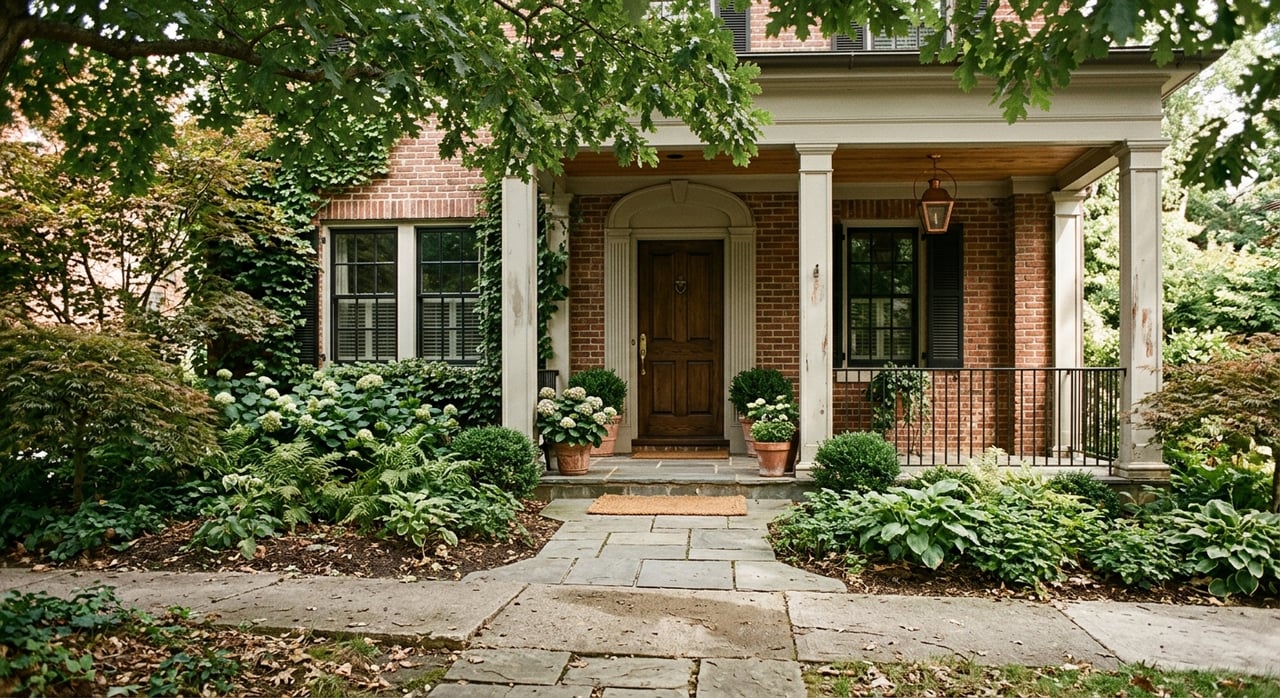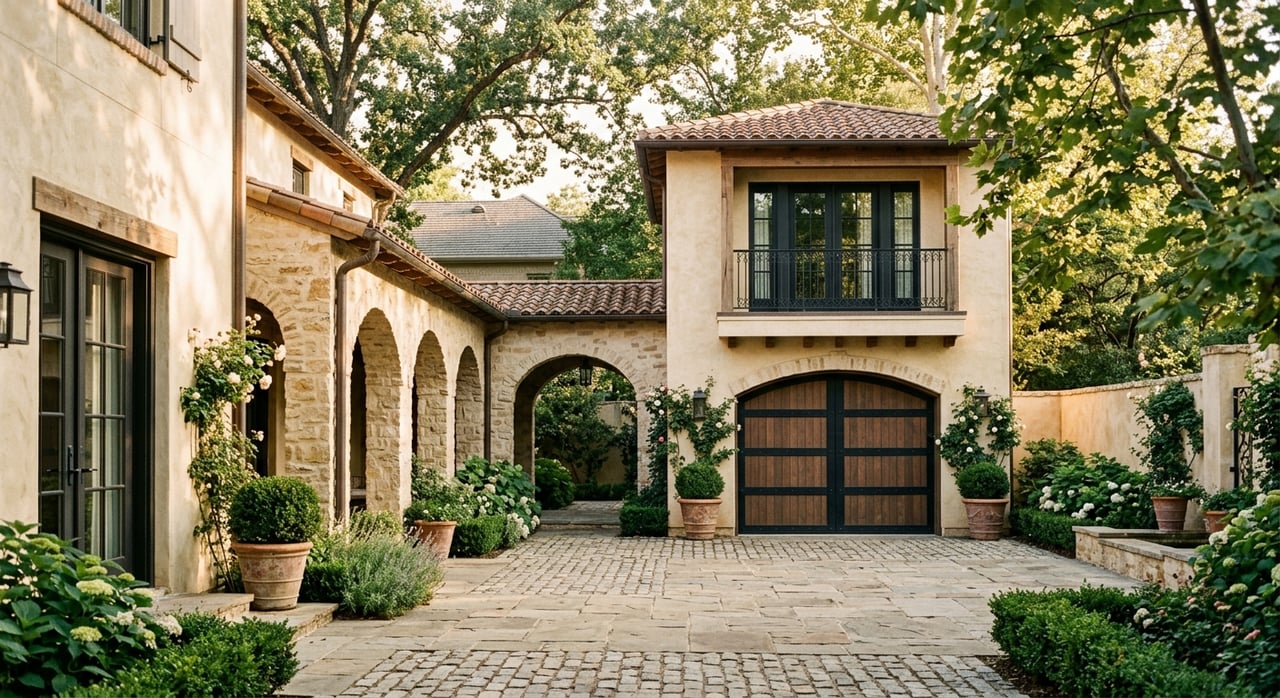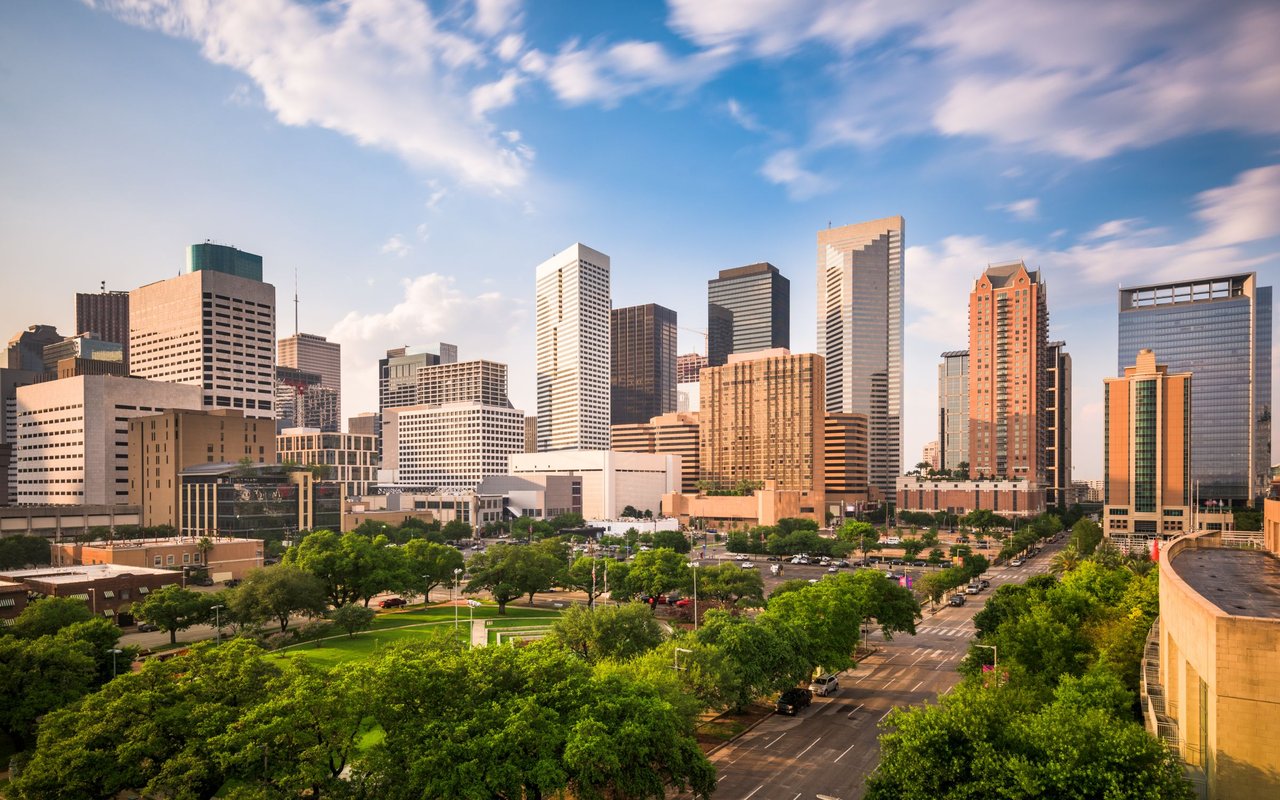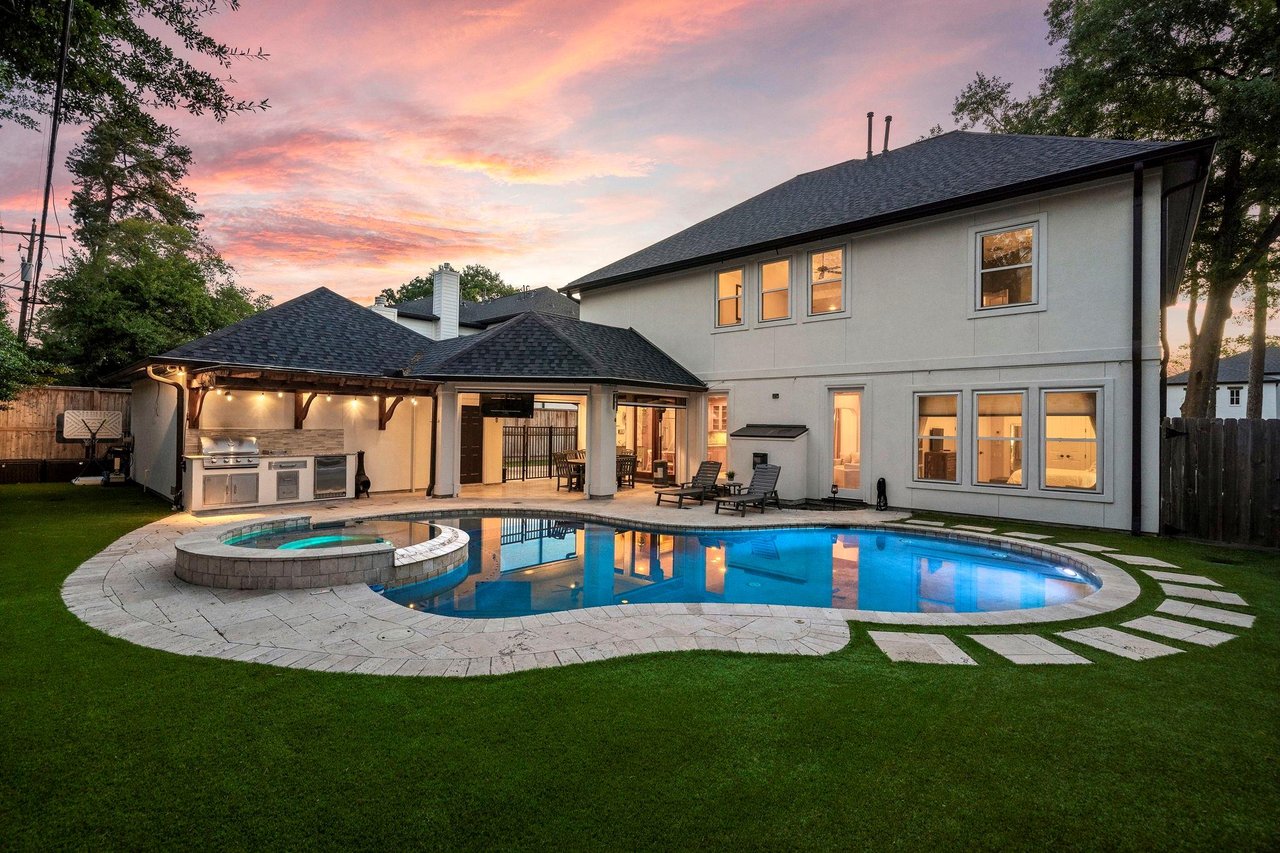
Tanglewood is one of Houston's most enduring addresses. It's been that way since 1949, and the reasons haven't changed much: large lots, mature trees, a location that puts you minutes from the Galleria and downtown, and a homeowners association that has spent seven decades making sure the neighborhood stays exactly what it was built to be: a quiet, tree-lined residential enclave for families who want to be close to the city without feeling like they're in it.
For buyers who know Houston's luxury market well, Tanglewood rarely needs an introduction. For those still getting oriented, it's worth understanding in some depth.
Interested in Tanglewood homes? Contact Shannon and Lisa to start the conversation.
Location and access
Tanglewood sits just west of the 610 Loop and inside Beltway 8, in the Uptown area of Houston. It's bounded by Buffalo Bayou to the north, Westheimer Road and San Felipe Street to the south, the 610 Loop to the east, and South Voss Road to the west.
The location is one of Tanglewood's most consistent selling points. The Galleria is minutes south. Uptown and Post Oak Boulevard are effectively adjacent. Downtown Houston is a 16 to 18 minute drive. Memorial Park and Buffalo Bayou Park are close enough for regular use. The Energy Corridor is accessible via I-10 to the west, and the Texas Medical Center is reachable on the same highway heading southeast.
Within the neighborhood, the streets are wide and the road network curves gently rather than running on a grid, which keeps the interior feel residential even as Westheimer and San Felipe are busy just outside.
The neighborhood's character
What sets Tanglewood apart from other affluent Houston neighborhoods is harder to quantify than location or price. It has something to do with the trees. Tanglewood Boulevard, the neighborhood's central esplanade, is lined with live oaks planted by the Tanglewood Garden Club, and around 5,000 trees are scattered across the 23 sections of the neighborhood. Before Tanglewood was developed, the land was coastal prairie that burned regularly. The suppression of wildfires after development allowed trees to take hold, and what grew up over the following decades is now one of the greenest canopies of any neighborhood inside Beltway 8.
The boulevard itself is more than an aesthetic feature. It has benches, a bike path, and walking trails, and it functions as a genuine gathering place for residents. The Tanglewood Homes Association, one of the oldest continuously operating civic organizations in Houston, maintains strict deed restrictions and coordinates a neighborhood patrol. Before any exterior modification or new construction can proceed, plans must be approved by the Architectural Control Committee. That level of oversight is part of why Tanglewood has remained cohesive while other nearby areas have seen more haphazard development.
It is also a neighborhood with history. George H.W. and Barbara Bush were longtime Tanglewood residents. The Houston Country Club, whose 125-acre golf course was assembled from land originally belonging to the Bering family, anchors the neighborhood's social life for members. High-profile Houstonians have consistently chosen Tanglewood, not because it's the loudest statement in the city's luxury market, but because it offers something harder to find: a neighborhood that truly feels established.
Tanglewood real estate
The original homes in Tanglewood were ranch-style houses built in the late 1940s and through the 1950s. Those originals are now the minority. Most have been replaced over the years with larger two-story estates in Georgian, French, Mediterranean, and contemporary styles. The teardown-and-rebuild cycle has been active here for decades, and what you find today is predominantly a neighborhood of grand custom homes on generous lots.
Those lots are one of Tanglewood's defining features, and they're larger and wider than what buyers typically encounter in other inner loop neighborhoods. Typical widths run 85 to 100 feet, with common lot sizes between 12,000 and 20,000 square feet. On premier streets and in the estate sections, lots can exceed 100 feet in width and 30,000 square feet overall.
Tanglewood is deed-restricted rather than zoned, and setbacks vary slightly by section, but most follow a similar pattern: front setbacks of 25 to 35 feet, side setbacks of 5 to 10 feet per side, and rear setbacks of 20 to 25 feet. These are more generous than much of inner loop Houston, but it's worth noting that because homes here are large and lots are wider than they are deep, yard space behind the home can be more limited than buyers expect. Some lots accommodate only a cocktail-size pool once the home's footprint and setbacks are accounted for. Understanding the specific dimensions of any lot before designing around it is worth doing early in the process.
In 2024, 47 homes sold in Tanglewood at an average of $452.76 per square foot, a 7.3% increase over 2023. Active listings have averaged closer to $3.7 million at the upper end, with fully custom estates reaching above $7 million. The market is not high-volume: roughly 47 sales in a year across a neighborhood of 1,220 lots reflects a low turnover rate, which is typical of neighborhoods where buyers tend to stay.
Schools
Tanglewood is zoned to Houston Independent School District. The assigned public schools are Briargrove Elementary, Tanglewood Middle, and Wisdom High School, though many families opt for Lamar, Westside, or charter alternatives at the high school level. Tanglewood Middle operates as an International Baccalaureate World School, which is a meaningful program for the right student, and the campus was rebuilt in a $15 million reconstruction project completed in 2015.
That said, buyers purchasing in Tanglewood at this price point almost universally choose private school options, and the neighborhood's location makes that straightforward. Within a short drive are some of Houston's most respected private institutions:
- The Kinkaid School
- St. John's School
- Duchesne Academy of the Sacred Heart
- St. Mark's Episcopal School
- The Awty International School
- Second Baptist School
- Houston Christian School
For families where private school is the plan from the start, Tanglewood's school zoning becomes a secondary consideration. The access to private options is genuinely strong.
Everyday life in Tanglewood, Houston
Day-to-day life in Tanglewood is defined largely by proximity. The Galleria, one of the largest malls in the United States, is minutes away, and the surrounding Uptown area along Post Oak Boulevard adds another layer of dining and retail without requiring a significant drive. River Oaks District, Upper Kirby, and Highland Village are all close enough for regular use.
The Houston Country Club is the social anchor for members, with golf, tennis, and swimming, but Tanglewood also has its own smaller-scale rhythm. The esplanade on Tanglewood Boulevard is genuinely used: joggers, cyclists, dog walkers, and neighbors out for an evening walk are a regular presence. Tanglewood Park provides additional green space with walking trails and open lawn.
Memorial Park, one of the largest urban parks in the United States, is a short drive north and gives residents access to a 3-mile loop trail, tennis courts, a golf course, and a growing roster of park improvements that have made it one of Houston's most significant recreational assets.
For everyday errands, the neighborhood's location handles most needs efficiently. Whole Foods, H-E-B, and the retail infrastructure of the Galleria corridor cover groceries and daily shopping without leaving the immediate area.
A note on flooding
Tanglewood sits within the Buffalo Bayou watershed, which is an important distinction in Houston's flood conversation. Buffalo Bayou has historically performed considerably better during major rainfall events than the Brays Bayou watershed to the south, which includes harder-hit neighborhoods like Meyerland and Braeswood Place. The bayou's largely natural form has helped it absorb floodwater more effectively than the more heavily channelized Brays.
That said, flood risk in Houston is always property-specific. Some streets in Tanglewood have seen water during major events and others have not. FEMA maps are a starting point, but understanding the specific history of any property, its elevation, and how surrounding streets have performed during past storms is the more useful homework. That's a conversation worth having before making an offer.
Tanglewood history
The name Tanglewood comes from Tanglewood Tales, a collection of children's stories by Nathaniel Hawthorne that developer William Giddings Farrington often read to his daughter, Mary Catherine. In the late 1930s and early 1940s, Farrington acquired roughly 750 acres of flat coastal prairie west of what was then the Houston city limits, purchasing some of the land from the Humble Pipeline Company, now ExxonMobil. His vision was a planned residential enclave that combined city convenience with a sense of natural quiet.
The neighborhood officially opened in 1949, though the early months were slow. For the first six months, not a single home sold, a fact that reportedly caused the Farrington family significant stress. Then a series of heavy rainstorms flooded areas across Harris County, and Tanglewood, which had been planned on higher ground, stayed dry. Buyers took notice. Sales accelerated, and the neighborhood filled in rapidly through the 1950s on the back of Houston's postwar oil and manufacturing boom.
The Tanglewood Homes Association was chartered in 1948, before the first home was sold, and has been operating continuously ever since. The organization enforces deed restrictions, maintains common areas, and oversees the architectural approval process that has kept the neighborhood's character intact across more than seven decades and multiple cycles of new construction.
Lisa & Shannon's Insider Take on Tanglewood
Is Tanglewood mostly original ranch homes? Not anymore. While Tanglewood started with ranch-style homes, those are now very much the minority. Most have been replaced with larger two-story estates, transitional new construction, and custom luxury homes. You'll still find some beautifully updated originals, but today Tanglewood feels much more like an established luxury neighborhood than a mid-century one.
Are Tanglewood lots actually larger than other Inner Loop neighborhoods? Yes, and buyers feel that immediately. Most lots in Tanglewood are noticeably wider than what you'll find in places like West University, Rice Military, or many newer inner loop communities. That extra width changes the feel of everything. Homes don't sit stacked on top of each other, streets feel more open, and the neighborhood has a spaciousness that's hard to find this close to the city. Typical dimensions:
- Width: 85 to 100 feet
- Common lot size: 12,000 to 20,000+ square feet
- Premier streets: 100+ feet wide, 20,000 to 30,000+ square feet
Does that mean every Tanglewood home has a huge backyard? Surprisingly, no, and this catches buyers off guard. Because today's homes are significantly larger than the originals and Tanglewood has meaningful front setbacks, some lots are actually wider than they are deep in terms of usable backyard space. You can be on a 15,000-square-foot lot and still find the backyard smaller than expected. In some cases, the lot only comfortably allows for a cocktail pool rather than a full pool and lawn setup. Lot size alone doesn't tell the whole story. How the house sits on the lot matters just as much.
What are the setback rules in Tanglewood? Tanglewood is deed-restricted rather than traditionally zoned, and restrictions can vary by section, but generally:
- Front setbacks: 25 to 35 feet
- Side setbacks: 5 to 10 feet per side
- Rear setbacks: 20 to 25 feet
Compared to many inner loop neighborhoods these are fairly generous, which helps create that established residential feel. That said, newer builds often maximize every inch they can.
Why do the streets in Tanglewood feel different? Because they are. One of the first things buyers notice is how wide the streets are. It gives the neighborhood a more gracious, estate-like feel and makes it less dense than most inner loop neighborhoods. That said, traffic does cut through certain parts of Tanglewood, especially around Tanglewood Boulevard, as people move between major arteries. Some streets are much quieter than others. This is a neighborhood where the specific street matters.
Is Tanglewood secure? The Tanglewood Patrol is no joke. Residents take neighborhood security seriously, and that private patrol presence is something buyers consistently value. No neighborhood is immune to everything, but from a buyer perception standpoint, security is considered one of Tanglewood's genuine strengths.
Who tends to buy in Tanglewood? Buyers who want luxury but not necessarily flash. Tanglewood tends to attract executives, long-time Houston families, relocation buyers, and buyers cross-shopping Memorial, River Oaks, and West University. It's for someone who wants space, location, mature trees, and an established feel without the visibility of River Oaks or the longer commute of some Memorial neighborhoods.
Is every part of Tanglewood the same? Definitely not, and that's one of the biggest mistakes buyers make. Two homes with similar square footage and lot sizes can feel completely different depending on street traffic, tree canopy, how close neighboring homes sit, whether the home preserved yard space or maximized square footage, and which section's deed restrictions apply. Tanglewood is a neighborhood where micro-location really matters. This is exactly the kind of thing worth talking through before you start touring.
Shannon and Lisa of Property Collective Group know Tanglewood at the street level and work with buyers and sellers throughout the neighborhood. If you want a candid read on where Tanglewood fits in your search, reach out for a conversation. Text (713) 320-3335 or email [email protected].