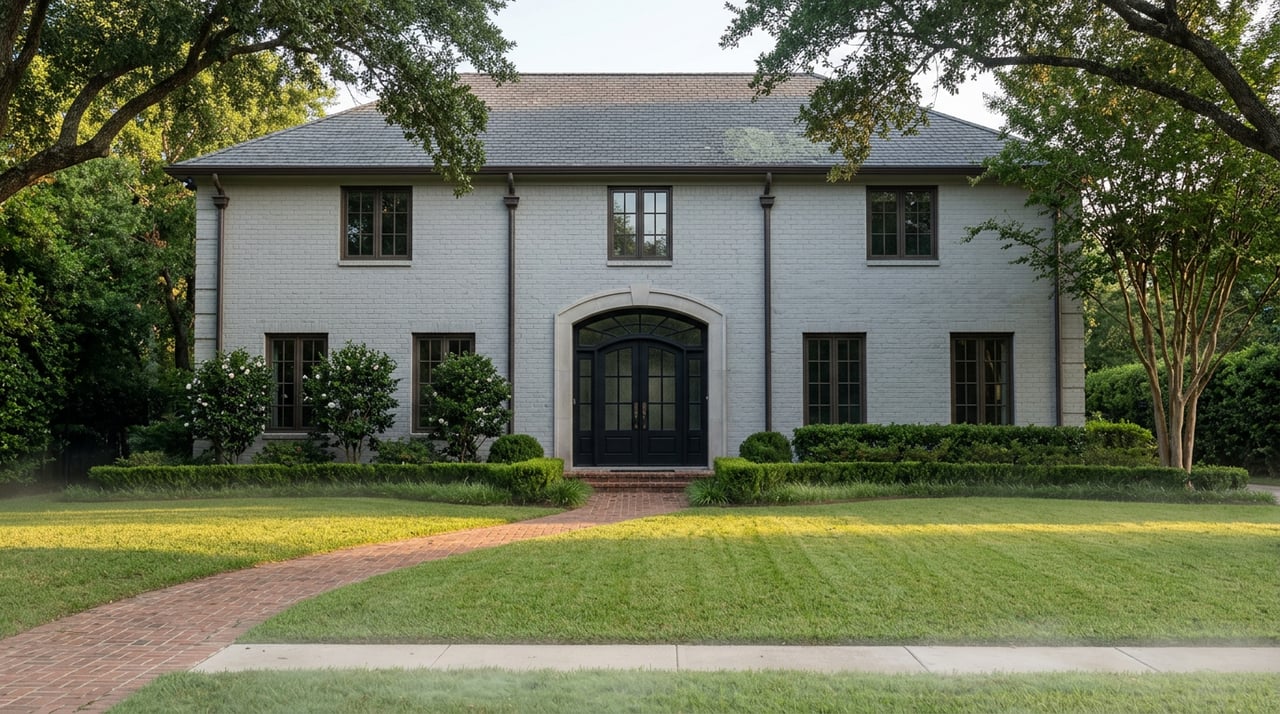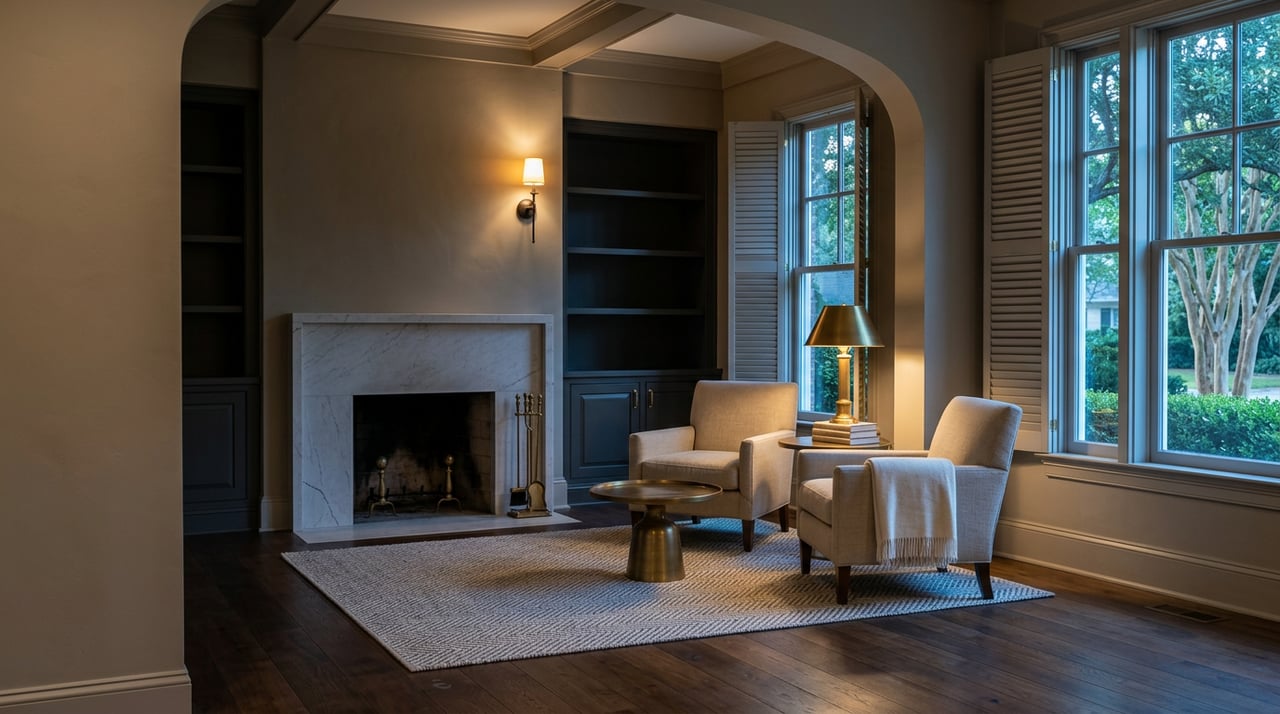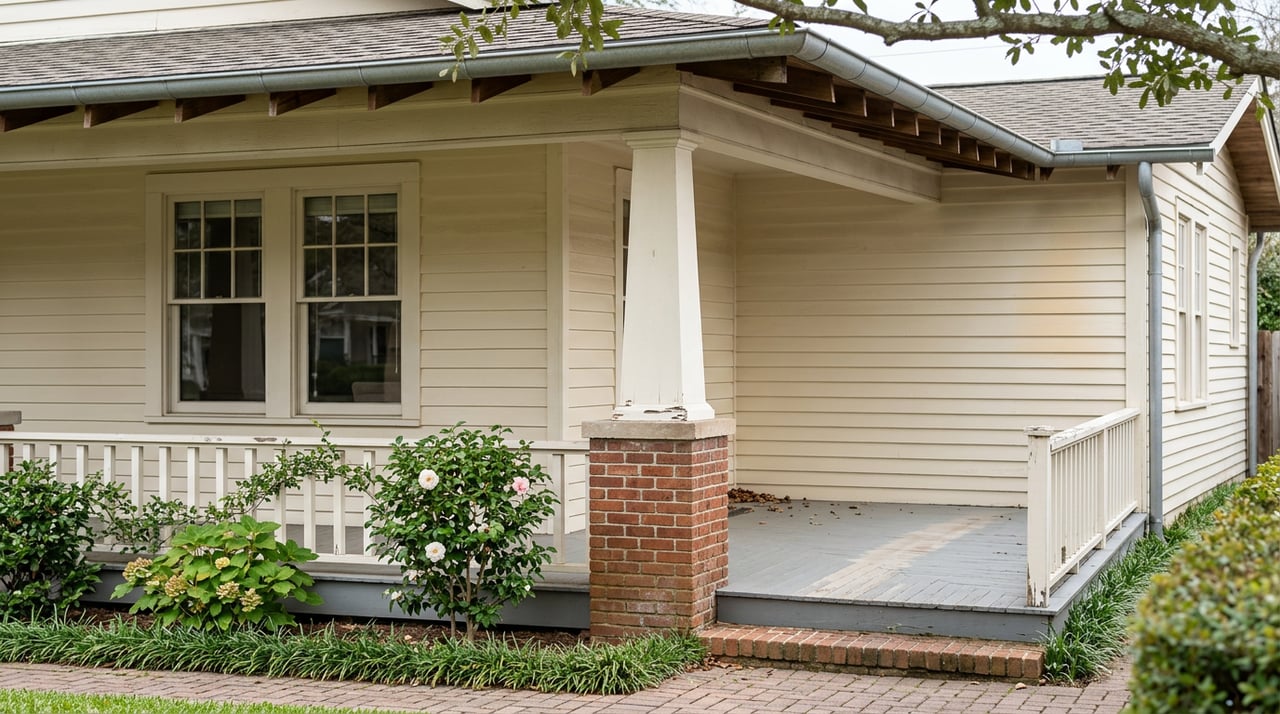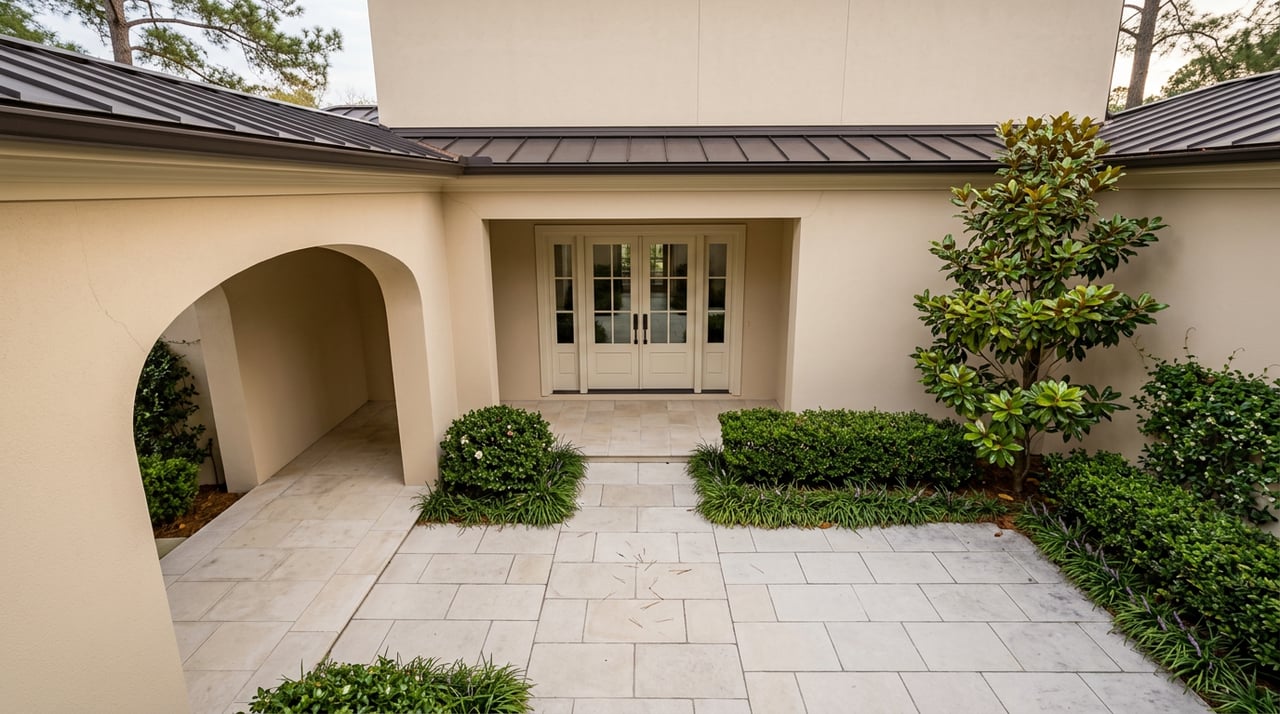
Two buyers look at the same two houses on the same cul-de-sac in Grogan's Mill. Same builder, same year, same square footage, same "no HOA" line in the listing. One of them will end up paying more every year than the other, and the listing sheet will never tell them why. The difference sits underneath the lot, not inside it, in a taxing district neither buyer has heard of until the closing documents arrive.
That is the gap between what "no HOA" promises and what it actually delivers in The Woodlands. The claim is technically accurate. It is also the reason people compare two homes on price and square footage and miss the number that will show up on every tax bill for as long as they own the house.
The Line Everyone Repeats and What It Actually Skips
Search for homes in The Woodlands and you will read some version of the same sentence in almost every listing and buyer guide: no traditional homeowners association. It is true in the narrow sense. There is no single master HOA collecting a monthly check from every resident the way there might be in a newer subdivision.
What that sentence skips is that three separate structures split the job a private HOA would normally do, and they are not interchangeable. One controls what you can build. One hosts your neighborhood's spring event and has nothing to do with money or rules. One shows up on your property tax bill and can vary from one side of a street to the other. Treating "no HOA" as shorthand for "fewer costs" or "less oversight" is where buyers get it wrong.
Who Actually Approves Your Fence
The Woodlands Township runs a Covenant Administration department that enforces deed restrictions and reviews permits for exterior changes to a home, everything from fences to additions to satellite dishes. Every developed village has its own Residential Design Review Committee, made up of at least three residents elected to one-year terms, and each committee meets monthly to review neighbors' applications for modifications. Above those village committees sits a Development Standards Committee, made up of Township-appointed and developer-appointed members, which is the only body with the authority to grant a variance.
That is a functioning architectural review system. It just runs through a public special-purpose district instead of a private association, and it is funded by the Township's property tax rate rather than a monthly HOA invoice. The Township's board adopted a 2026 rate of $0.1694 per $100 of taxable value on September 3, 2026, down from $0.1714 the year before. That is one real number a buyer can point to. It is also only one of the three layers, and the smallest one to move the needle on total cost.
The Village Association Isn't the HOA You Think It Is
Here is where the confusion compounds. Every village in The Woodlands, from Grogan's Mill to Sterling Ridge to Alden Bridge, has its own Village Association with an elected volunteer board. People assume this is the HOA, because it has a board, a name tied to the neighborhood, and a website that looks official.
The Sterling Ridge Village Association's own description of its role says the opposite. It organizes social events and informational hearings, and it raises money for local elementary schools and village events. It states directly that it does not collect homeowner fees and does not enforce property covenants. Questions about covenants, property modifications, or fees get referred straight back to the Township.
Grogan's Mill's Village Association runs the same way. Its board has helped fund an annual scholarship program and organizes community cleanup days, and several of its past and current directors have gone on to serve as elected board members of the actual MUDs that tax the neighborhood. That overlap is worth sitting with for a second: the people most visible in your Village Association are frequently the same people who later sit on the board that sets your actual utility tax rate. The association itself, though, holds no financial authority over your property.
So when a listing or a neighbor tells you "the village association handles that," ask which thing they mean. If it is architecture or a deed restriction, that is the Township. If it is a scholarship fund or a Fourth of July parade, that is the Village Association. Neither of those is where your recurring tax bill comes from.
The Real Variable Is the MUD Underneath Your Lot
The Woodlands sits on top of ten Municipal Utility Districts, each an independent taxing entity with its own elected board, each responsible for water, wastewater, and drainage in its slice of the community. Grogan's Mill alone is served by parts of MUD 6, MUD 36, and MUD 46, according to Woodlands Water's own district map. That means two homes inside the same village, subject to the same Township covenants, checked by the same RDRC, can sit in different MUDs and carry different tax lines for the exact same utility service.
| Layer | What it controls | Who runs it | How it's funded |
|---|---|---|---|
| Township Covenant Administration, village RDRC, Development Standards Committee | Deed restrictions, exterior permits, variances | Elected village volunteers plus Township staff | Township property tax ($0.1694/$100 for 2026) |
| Village Association | Community events, scholarships, neighborhood engagement | Elected volunteer board per village | Its own fundraising, no dues collected |
| One of 10 Municipal Utility Districts | Water, wastewater, drainage infrastructure | Elected MUD board per district | Separate MUD tax line, rate varies by district |
This is not a static cost either. The San Jacinto River Authority, which works with all ten districts through the Woodlands Water Agency, has a 2026 to 2035 capital plan that was initially projected near $729 million and has since been revised down after a year-long waterline condition assessment concluded that asbestos cement line replacement needs were closer to $150 million than the original $250 million estimate. A separate lift station conversion project near Sawdust Road was dropped as not cost effective, while the aging wastewater treatment plant in Grogan's Mill is still under evaluation for a possible replacement that officials say could run into the hundreds of millions if it happens. Woodlands Water's general manager has said the agency wants to avoid financing that work with new bonds, which means residents in the affected districts could see it show up in water bills instead.
None of that is Township business. It moves through the MUD line on your tax bill and your water bill, and which MUD you're in is the accident of which side of a boundary your specific lot falls on.
The Township rate went down for 2026. That doesn't tell you anything about what's happening one line below it on the same tax bill.
What to Ask Before You Compare Two Houses
If you're comparing two Woodlands listings that both say "no HOA," that phrase has already told you less than you think. Before you compare price per square foot, ask for the specifics that actually separate the two properties:
- Which of the ten MUDs serves this address, and what is its current combined tax rate
- Whether the property has any pending special assessment tied to SJRA's waterline or wastewater capital plan
- The village's specific Neighborhood Criteria, since Township standards can vary from one village to another even though the base Covenants apply everywhere
- Whether the Village Association newsletter or minutes mention any upcoming MUD board elections, since those elections set the rate that actually moves your bill
- The Township's current adopted property tax rate versus the prior year, so you know whether that piece of the bill is rising or falling
A resale certificate request and a look at the Montgomery Central Appraisal District record for the specific address will answer most of these faster than a general search ever will.
A Few Quick Answers
Does The Woodlands really have no HOA? Correct in the narrow sense that there is no single, community-wide homeowners association collecting monthly dues. Covenant enforcement instead runs through the Township, and utility costs run through whichever MUD serves the address.
What is a Village Association if it's not the HOA? A resident-led volunteer group tied to one village, focused on events, scholarships, and community engagement. Groups like the Sterling Ridge Village Association and the Grogan's Mill Village Association state directly that they do not collect fees or enforce covenants.
Why would two homes in the same village have different tax bills? Because MUD boundaries don't always follow village boundaries. A village like Grogan's Mill can be split across multiple MUDs, each with its own board and its own rate.
The Takeaway
"No HOA" is a real fact about The Woodlands, and it is also the least useful fact for comparing two specific houses. The Township, the Village Association, and the MUD each do a different job, and only one of the three shows up as a predictable, community-wide number. The other sits at the exact address, not the village name on the sign.
If you're weighing a move into The Woodlands, or comparing it against another Houston-area community, that address-level detail is exactly the kind of thing worth a second look before you write an offer. Property Collective Group works across central and west Houston and into The Woodlands, and can pull the district-specific numbers for a property you're considering. Request Your Instant Home Valuation to start with a clear picture of where a specific address actually stands.