Trying to choose between a townhome and a bungalow in Greater Heights? You are not alone. Many buyers love the area’s walkability, mature trees, historic character, and easy access to restaurants and trails, but the right fit often comes down to how you want to live day to day. If you are weighing charm against convenience, outdoor space against lower upkeep, this guide will help you compare the trade-offs clearly. Let’s dive in.
Why this choice matters in Greater Heights
Greater Heights is not a one-style neighborhood. According to the City of Houston’s Greater Heights overview, the area includes historic blocks developed in the 1920s and 1930s as well as later sections built from the 1930s into the 1950s. That mix helps explain why one street may feel porch-forward and spacious while another has a more modern, townhome-oriented pattern.
That variety gives you options, but it also means the best home type depends on your priorities. In a market where HAR reports continued demand driven by walkability, mature trees, historic charm, and proximity to local amenities, choosing the right lifestyle fit can matter just as much as choosing the right price point.
What a townhome lifestyle looks like
In Greater Heights, a townhome often means newer construction, more interior space, and less lot to maintain. A current Heights-area example on HAR shows a 3-story gated townhome with 2,527 square feet on a 1,457-square-foot lot and a $250 monthly maintenance fee, which gives you a good snapshot of the trade-off between space and upkeep.
For many buyers, that setup supports a lock-and-leave lifestyle. You may have less yard work, more predictable shared maintenance, and a layout designed around urban convenience. Attached garages are also common in townhome communities, which can make coming and going simpler.
Townhome strengths
A townhome may fit you best if you want:
- More interior square footage on a smaller footprint
- Lower day-to-day exterior maintenance
- A home that is easier to leave for work travel or weekend trips
- Newer layouts and attached-garage convenience
- More structured upkeep through HOA or maintenance arrangements
Townhome trade-offs
That convenience usually comes with some compromises. Monthly HOA or maintenance fees are more common, and outdoor space is typically more limited than what you would find with a traditional bungalow.
Street context matters too. The City of Houston’s Heights setting guidelines note that many historic blocks favor one- and two-story massing, detached rear-lot garages or carports, and side or rear parking. On some streets, deed restrictions can also affect density, setbacks, and shared walls, so not every part of Greater Heights supports the same townhome pattern.
What a bungalow lifestyle looks like
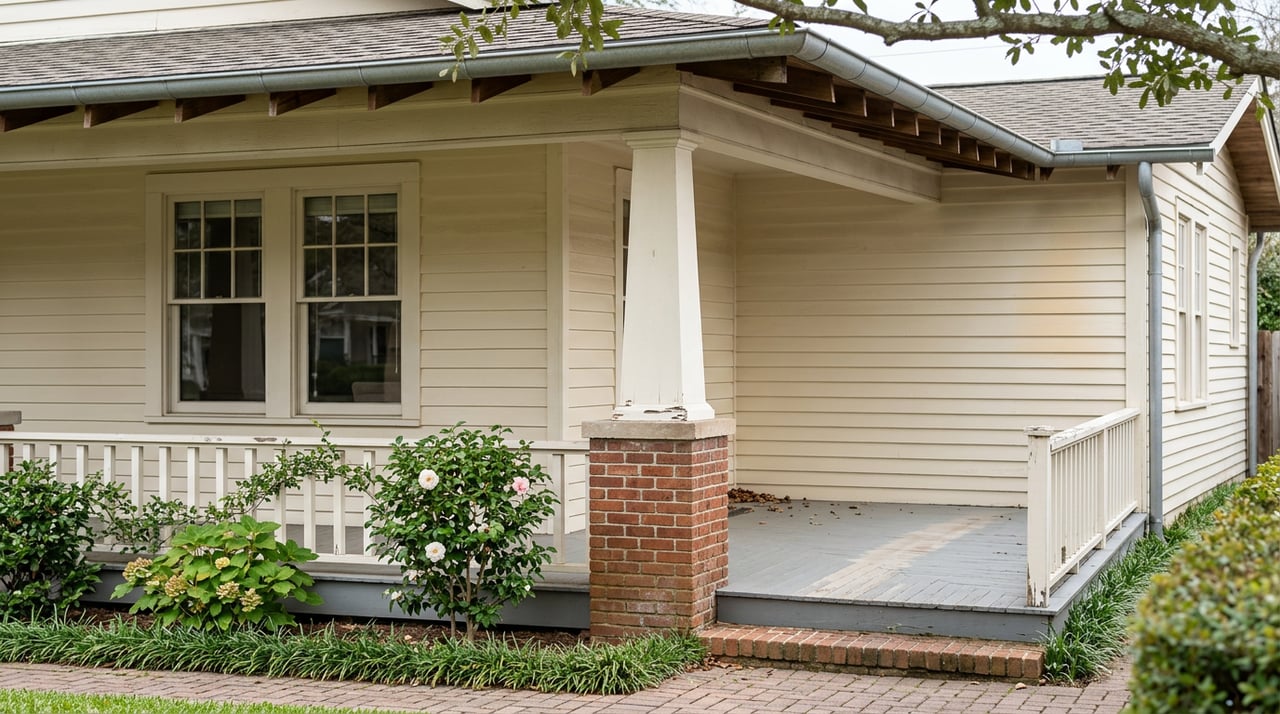
A Heights bungalow usually offers almost the opposite experience. Instead of maximizing interior space on a smaller lot, bungalows often give you more outdoor utility, a more traditional streetscape, and architectural details that many buyers love.
The City of Houston’s Heights architectural guide identifies Queen Anne, Craftsman, Folk National, and Folk Victorian among the area’s common historic styles. The city also notes that many historic Heights homes feature large windows, porches, and pier-and-beam foundations, which helps explain why these homes feel distinct from newer construction.
Bungalow strengths
A bungalow may fit you best if you want:
- A front porch, yard, or more usable outdoor space
- More privacy than shared-wall living typically offers
- Detached-garage or rear-yard flexibility
- Historic character and one- or two-story living
- No mandatory HOA fee in some cases
A current North Norhill example on HAR shows a 1926 single-family home on a 5,000-square-foot lot with a detached garage and no mandatory HOA or maintenance fee. Another Heights bungalow listing highlights backyard and side-yard outdoor space, reinforcing how these homes often support a different kind of daily living.
Bungalow trade-offs
More lot space can also mean more responsibility. If you own a bungalow, you are more likely to handle your own exterior maintenance, landscaping, and long-term repairs.
If the home sits in a historic district, exterior changes may involve an added layer of review. The city explains that exterior alterations in a historic district or to a landmark generally require review and, unless exempt, a Certificate of Appropriateness. Some ordinary maintenance and in-kind work are exempt, but you will want to confirm the rules for any specific address.
Compare the daily lifestyle fit
When buyers compare townhomes and bungalows in Greater Heights, the most important differences usually show up in everyday routines rather than just square footage.
Maintenance and upkeep
If you prefer fewer maintenance surprises, a townhome often has the edge. Shared-maintenance structures and monthly fees can make costs more predictable, even if they do not eliminate them.
A bungalow can give you more control, but you are also likely to take on more exterior upkeep. That may be worth it if you value independence and outdoor space, but it is important to budget time and money accordingly.
Outdoor space and privacy
If your ideal home includes a porch, backyard, garden potential, or more breathing room between structures, a bungalow usually offers more. Greater Heights’ original lot patterns and historic setting standards often support that layout.
Townhomes generally trade land for interior efficiency. That can be a smart choice if you would rather spend your weekends enjoying the neighborhood than maintaining a yard.
Parking and layout
Parking works differently between the two home types. Historic bungalows in the Heights often use detached garages or side/rear parking, which supports the traditional streetscape described in the city’s defining-features guide.
Townhomes more often offer attached garages or community-oriented parking setups. That can feel more convenient, especially if you prioritize direct access and a more modern floor plan.
Rules and approvals
Townhomes are more likely to come with HOA rules and monthly fees. Bungalows may avoid those costs, but they can still be affected by deed restrictions or historic-district review, depending on the block.
That is an important point in Greater Heights because restrictions do not apply uniformly across the neighborhood. As the Houston Heights Association explains, land-use conditions can vary by lot and address, so broad assumptions rarely tell the full story.
How value factors into the decision
Your lifestyle comes first, but long-term value still matters. According to HAR neighborhood data for Heights / Greater Heights, median sold price per square foot increased from 155.3 in 2009 to 308.71 in 2024. That long-run growth helps show why buyers continue to see Greater Heights as a compelling place to own.
The real question is not whether one category is universally better. It is whether you value historic character and lot size more, or newer convenience and lower exterior responsibility. In a market where HAR reports inventory has moved closer to balance, well-positioned homes in either category can still stand out when they match what buyers want.
Questions to ask before you choose
Before you decide between a townhome and a bungalow, ask yourself:
- How much exterior maintenance do you want to handle yourself?
- Do you want a yard, porch, or more outdoor flexibility?
- Would an attached garage make daily life easier for you?
- Are you comfortable with HOA fees and community rules?
- If considering a bungalow, are you open to historic-district guidelines or review processes?
- Do you prefer multi-level living or a more traditional one- or two-story layout?
Your answers usually point to the better fit faster than square footage alone.
Which lifestyle fits you best
A townhome may be the better fit if you want convenience, lower day-to-day upkeep, and a home that works well for a lock-and-leave schedule. A bungalow may be the better fit if you want outdoor space, architectural character, and more separation from neighboring homes.
In Greater Heights, the right answer is often less about trend and more about rhythm. How you spend your mornings, weekends, and time at home should shape the decision. When you line up the home type with your actual lifestyle, the choice becomes much clearer.
If you are comparing homes in Greater Heights and want senior-level guidance on the trade-offs that matter by block, street, and property type, the team at Property Collective Group can help you navigate the options with clarity and confidence.
FAQs
What is the difference between a Greater Heights townhome and bungalow?
- A Greater Heights townhome usually offers more interior space on a smaller lot with lower exterior maintenance, while a bungalow usually offers more yard space, porch-forward design, and a detached-home layout.
Are all homes in Greater Heights considered historic?
- No. According to the Houston Heights Association, rules and restrictions can vary by address, and only some properties are in city-designated historic districts or deed-restricted areas.
Is a townhome easier to maintain in Greater Heights?
- Usually yes. Townhomes often include HOA or shared-maintenance structures that reduce day-to-day exterior responsibilities, though monthly fees are common.
Does a bungalow in Greater Heights usually have more outdoor space?
- Yes. Bungalows more often include porches, yards, and rear outdoor areas, while townhomes typically use more of the lot for interior living space.
Can you remodel a bungalow in Greater Heights without approval?
- Not always. If the home is in a historic district or has landmark status, exterior changes may require city review and a Certificate of Appropriateness unless the work is exempt.
Which home type in Greater Heights is better for lock-and-leave living?
- A townhome is usually the better fit for lock-and-leave living because exterior upkeep is often more structured and manageable through shared maintenance or HOA arrangements.