You keep seeing West U listings that say “lot value only” and wonder if one could be your path to a bigger, newer home in a prime location. It is a smart way to buy into a high‑demand area, but the numbers and rules are different from a typical resale. In this guide, you’ll learn how lot sizes, framed‑area limits, costs, financing, taxes, and flood risk shape your plan. Let’s dive in.
Lot value basics in West U
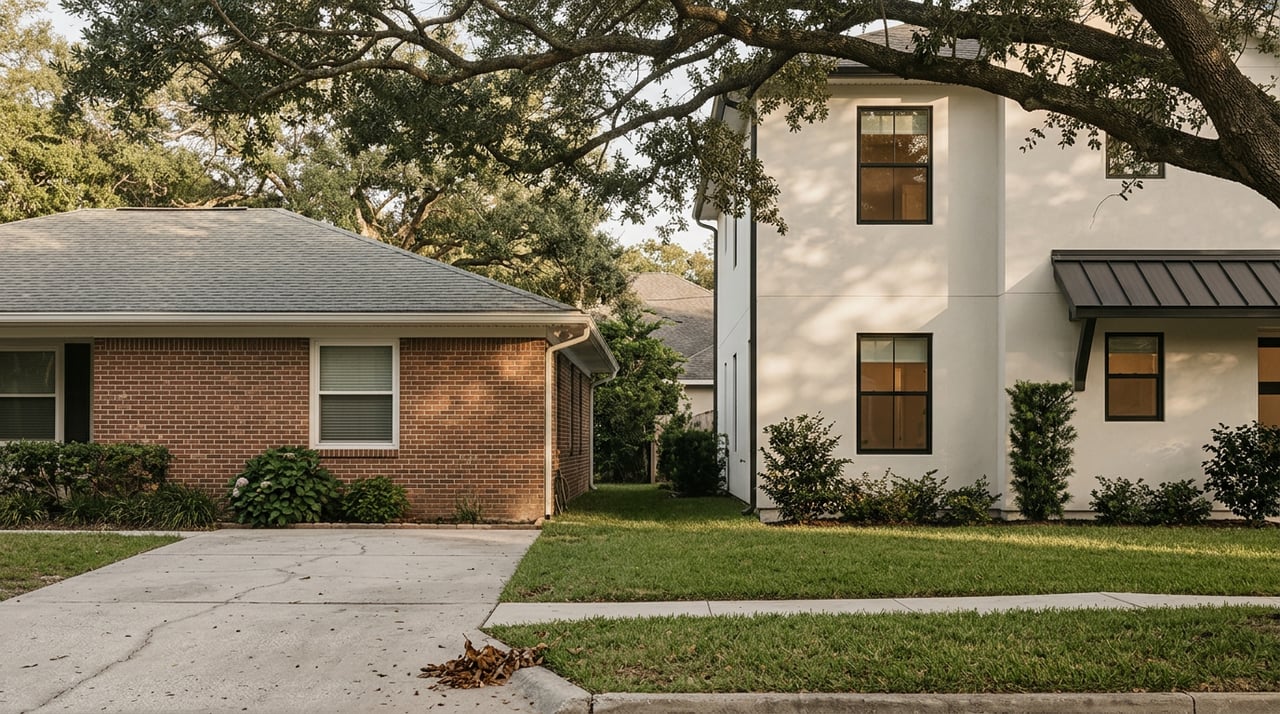
In West University Place, land often carries most of the value because the city is small and demand is strong. Typical lots are about 5,000 square feet, which drives compact site plans and premium land pricing. Neighboring Southside Place often has larger lots, with many examples in the 7,000 to 10,000 plus square foot range. That lot size difference affects what you can build and how you value the land.
If you are new to the area, local reporting confirms the steady pace of redevelopment in these smaller cities, with many older cottages giving way to new single‑family homes. You will see a mix of renovation and teardown activity depending on location and lot specifics. Community coverage of the trend helps explain why land holds such a premium.
What you can build: key rules
West University Place regulates house size using a “framed area” measurement. For single‑family lots, the city applies an approximately 80 percent framed‑area cap relative to the lot size, along with conventional setbacks and other standards. You can review the definitions and district rules in the West U zoning ordinance.
The city’s plan submission checklist spells out what you must provide before you can build. Expect soils reports, a tree disposition plan, neighbor notification letters for teardowns and new construction, and flood certificates when required. These requirements shape what fits on a 5,000 square foot lot and how you design the structure. See the city’s plan submission requirements for details.
Southside Place is its own city with separate processes and standards. Always confirm which municipality controls your address, then pull the right checklist and rules. You can start with Southside Place’s city site to identify the correct contacts and procedures.
Teardowns, sizes, and timelines
On a typical 5,000 square foot West U lot, older bungalows are often replaced with custom builds around 3,000 to 4,500 square feet. The exact size depends on plan design, accessory structures, and how framed area is counted. Larger Southside Place lots can offer more flexibility, but you still must meet local rules.
Plan for a multi‑step timeline. Pre‑purchase due diligence and early design conversations can run a few weeks. Custom plan design often takes a couple of months or more, and municipal plan review can take weeks to a few months depending on scope and completeness. Demolition plus construction for a new custom home commonly runs 8 to 14 months once you break ground. Incomplete submittals or variance requests can add time, so front‑load accuracy.
How builders price land
You will hear two valuation frameworks:
- Market or extraction approach. Look at recent sales of vacant lots or homes sold primarily for land value to gauge a per‑lot or per‑square‑foot price.
- Residual approach. Start with the expected sales price of the finished home, subtract realistic hard and soft construction costs, fees, carrying costs, and a builder’s profit. The remainder is the maximum sustainable land price. The CCIM Institute explains this residual method, which is widely used by builders and appraisers.
The takeaway for you: do not assume lot value equals list price minus an arbitrary construction budget. Build a simple residual, ground your costs with conservative local builder quotes, and pressure‑test the expected resale value with recent new‑construction comparables.
Costs that drive your math
Local custom build costs vary by finish level and complexity. A reasonable directional range for single‑family custom work in the Houston area is about 150 to 300 plus dollars per square foot, with luxury builds often higher. See recent build‑cost guidance for Houston to frame your expectations, then validate with three local builder estimates.
Site conditions in West U and Southside Place can add material cost. Required soils studies, potential flood elevation work, tree protection, tight‑street staging, and utility coordination all affect your budget. West U’s plan submission checklist highlights the soils report and other pre‑construction documentation you should factor into your pro forma.
Financing options that fit your plan
If you plan to buy and renovate rather than rebuild, two products can help you bundle purchase and improvements:
- FHA Section 203(k). This FHA‑insured loan combines purchase and rehab into one. Program rules, limits, and documentation apply. Review the FHA 203(k) overview for details.
- Fannie Mae HomeStyle Renovation. A conventional renovation option that can finance purchase and improvements in one loan when you and the property qualify. Read about HomeStyle Renovation to understand how lenders underwrite these.
For teardowns and new builds, you will likely use construction financing. A one‑close construction‑to‑permanent loan can reduce closing costs and rate‑lock risk, while a two‑close structure offers flexibility but adds a second closing. Lot‑only loans can require larger down payments and carry higher rates. Not all lenders offer the same structures, so speak with local banks and construction‑focused lenders early.
Appraisals and contract structure
Lenders will order either an as‑is appraisal for a purchase or an as‑completed appraisal for construction or renovation loans. If your contract assumes a high land price split that the appraisal does not support, your financing may fall short. Ask your lender how they want the contract structured and whether they accept as‑completed appraisals. This reduces the risk that the deal fails over an unsupported lot premium.
Permits, fees, and neighbor steps
Plan review and permitting fees are real line items. Confirm the current schedule with the city before you submit plans so your budget reflects all charges. Build in time for public steps too. In West U, you must send letters to adjacent residents when you apply for building permits, and tree preservation or mitigation can add cost.
Taxes after you build
Texas appraisal districts value property as of January 1 each tax year, and substantial improvements can trigger updated appraisals in that cycle. Expect an increase in appraised value after a teardown and new build. The Texas Comptroller explains the reappraisal timetable and process in its guidance on appraisal and tax administration.
If you plan to homestead the property, assessed value increases for a residence homestead are often limited to about 10 percent per year, subject to definitions and exceptions. New improvements and the timing of your exemption can change how caps apply. Consult the appraisal district early for your specific scenario.
Flood risk and insurance
Flood risk in West U and Southside Place is very address‑specific. FEMA’s Risk Rating 2.0 now prices many policies using property‑level factors, including first‑floor height and distance to water. Local reporting shows ongoing drainage attention in nearby watersheds and highlights why elevation, claims history, and certificates matter. For a primer on what local homeowners are navigating, read this overview of flood insurance changes.
Before you write an offer, check the FEMA map for the exact address, request any elevation certificates or prior flood disclosures from the seller, and confirm whether elevation is required for a rebuild. Flood insurance and elevation work can materially change your math.
Buyer due diligence checklist
Use this list during your option period or before you submit an offer:
- Confirm the municipality. Is the property in West University Place, Southside Place, or the City of Houston? Pull the correct zoning and permit rules, and note any private deed restrictions or HOA covenants.
- Verify framed‑area, setbacks, and trees. Ask the city to confirm how framed area will be calculated for your lot and what tree protections apply. Review the city’s plan submission checklist to anticipate required documents.
- Pull three sets of comps. Vacant lots, recent teardown sales, and recently built new homes within a tight radius. Use them to test your residual.
- Order early site intel. Ask a local geotechnical engineer about soils report timing and likely foundation type and cost. This can be several thousand to tens of thousands of dollars and affects your budget.
- Get hard and soft cost estimates. Request line‑item budgets from at least three local builders, including site work, permits, utilities, surveys, engineering, and contingencies.
- Talk to lenders. Confirm whether they finance lot‑only purchases, accept construction‑to‑permanent structures, and allow as‑completed appraisals.
- Budget for fees and notifications. Include plan review and permit fees, neighbor communication costs, potential board hearings, and plan revision cycles.
- Assess flood risk early. Check maps, gather flood history, and confirm elevation requirements before your option period expires.
Smart offer strategies
If you plan to demolish and build, consider a contract that allows for a clear appraisal path or feasibility review. An extended option period can give you time to order soils, consult with a builder, and complete a preliminary code check with the city. For small investors and owner‑builders, partnering with a trusted local builder who can provide a preliminary hard‑cost schedule often makes the difference between a deal that pencils and one that does not.
Your next step
Buying a lot‑value home in West U or Southside Place can be a great move when you approach it with the right numbers and a clear plan. If you want senior‑level advice on comps, residual pricing, and the permit path that fits your timeline, we are here to help. Connect with the team at Property Collective Group to map your options and move forward with confidence.
FAQs
What does “lot value only” mean in West U?
- It usually means the structure has minimal contributory value and buyers are expected to consider renovation or teardown, so most of the price reflects the land and its ability to support a new home under local rules.
How big are typical West U and Southside Place lots?
- West U lots are commonly about 5,000 square feet, while Southside Place often has larger lots in the 7,000 to 10,000 plus square foot range, affecting design choices and land value.
How do framed‑area rules limit new homes?
- West U uses a framed‑area calculation that caps total framed area on single‑family lots at about 80 percent of lot size, plus setbacks and tree protections that shape the footprint and massing.
How long does a teardown and rebuild take?
- Expect design and permitting to take several months and construction to run about 8 to 14 months, with total project timelines varying by plan complexity, site conditions, and permit completeness.
What construction cost range should I use?
- Directionally, many Houston‑area custom builds fall around 150 to 300 plus dollars per square foot, with higher numbers for luxury finishes and complex plans; verify with multiple local builder estimates.
Which loans work for renovation or rebuilds?
- For renovation, FHA 203(k) and Fannie Mae HomeStyle can combine purchase and rehab into one loan if you and the property qualify; for rebuilds, look at construction‑to‑permanent or two‑close construction financing with a lender that handles lot and build loans.
How will taxes change after I rebuild?
- Texas appraises as of January 1 each year; a new home typically leads to a higher appraised value. Homestead rules can limit yearly increases for a qualified residence, but new improvements and timing matter, so check with the appraisal district.
What flood steps should I take before I offer?
- Check FEMA maps for the exact address, request any elevation certificates and flood history from the seller, and confirm elevation requirements with the city; insurance and elevation work can reshape your budget.